Showing posts with label Genre: Biographic Fiction. Show all posts

Friday, April 8, 2016

The Swans of Fifth Avenue by Melanie Benjamin

Rating: ★ ★ ★ ★ ☆
Obtained from: Netgalley
Read: January 25, 2016

The New York Times bestselling author of The Aviator’s Wife returns with a triumphant new novel about New York’s “Swans” of the 1950s—and the scandalous, headline-making, and enthralling friendship between literary legend Truman Capote and peerless socialite Babe Paley. Of all the glamorous stars of New York high society, none blazes brighter than Babe Paley. Her flawless face regularly graces the pages of Vogue, and she is celebrated and adored for her ineffable style and exquisite taste, especially among her friends—the alluring socialite Swans Slim Keith, C. Z. Guest, Gloria Guinness, and Pamela Churchill. By all appearances, Babe has it all: money, beauty, glamour, jewels, influential friends, a high-profile husband, and gorgeous homes. But beneath this elegantly composed exterior dwells a passionate woman—a woman desperately longing for true love and connection. Enter Truman Capote. This diminutive golden-haired genius with a larger-than-life personality explodes onto the scene, setting Babe and her circle of Swans aflutter. Through Babe, Truman gains an unlikely entrée into the enviable lives of Manhattan’s elite, along with unparalleled access to the scandal and gossip of Babe’s powerful circle. Sure of the loyalty of the man she calls “True Heart,” Babe never imagines the destruction Truman will leave in his wake. But once a storyteller, always a storyteller—even when the stories aren’t his to tell. Truman’s fame is at its peak when such notable celebrities as Frank and Mia Sinatra, Lauren Bacall, and Rose Kennedy converge on his glittering Black and White Ball. But all too soon, he’ll ignite a literary scandal whose repercussions echo through the years. The Swans of Fifth Avenue will seduce and startle readers as it opens the door onto one of America’s most sumptuous eras.

═══════════════════════════ ❧  ═══════════════════════════

Truman Capote
The Swans of Fifth Avenue wasn’t a title I’d planned on reading. I recognized Truman Capote’s name in the jacket description, but I’d never heard of Babe Paley and generally speaking, I don’t have much regard for the scandal and drama of New York’s social elite. If I’m entirely honest, I wouldn’t have given the book a second thought if it had been written by anyone else, but Melanie Benjamin has been on my short list of favorite authors since I read The Aviator’s Wife and it’s simply not in me to overlook the work of those who’ve impressed me in the past.

I loved the style and tone of this piece. I think Benjamin did some really interesting things with the narrative and I liked how her characterizations highlighted the depth and personality of Capote’s Swans. I came to novel with stereotypic ideas of who these women might be and I appreciated how Benjamin’s treatment eclipsed those assumptions. I found Benjamin’s interpretation of Capote equally illuminating, but the circumstances of the story made him more challenging to appreciate. I felt genuine sympathy for the circumstances he faced, but his selfishness and disregard tempered the compassion and empathy I extended his character as the story progressed.

Despite myself, I was also captivated by the themes Benjamin wove into the fabric of the narrative. Maybe it’s me, but I liked the idea that the paragons who exemplified American life and style felt trapped and enslaved by the expectations associated with their status and reputation. Truman is outside their circle, but he suffers a comparative struggle in his effort to duplicate the success of In Cold Blood and I adored how Benjamin used those emotions to explore the isolation and insecurities these individuals might have experienced I real life.

The unconventional love story that takes place between Capote and Paley is also noteworthy. It is not a typical romance, but there is something remarkably intimate in Benjamin’s adaptation of their friendship. The connection exudes a familiarity and companionship that few physically involved leads can rival and I liked how Benjamin embraced their version of affection and used her novel as a platform to explore their emotional affair.

The novel’s pacing left something to be desired, but I ultimately enjoyed the story much more than I expected to. It is a shamelessly catty narrative, but I found the sophistication, vulnerability, and glamour depicted in The Swans of Fifth Avenue undeniably compelling and would definitely recommend it to fellow readers.

═══════════════════════════ ❧  ═══════════════════════════
Slim finally lit the blessed, blessed cigarette and took a long draw. She leaned back in her chair and exhaled, narrowing her eyes at Pamela. Strange, how Truman could bring them together, how he’d made allies out of enemies with his pen. 
═══════════════════════════ ❧  ═══════════════════════════

Sunday, September 9, 2012

The Lost Crown: A Novel of Romanov Russia by Sarah Miller

Rating: ★ ★ ★ ★ ☆
Obtained from: Local Library
Read: July 17, 2012

Olga, Tatiana, Maria, and Anastasia. Like the fingers on a hand--first headstrong Olga; then Tatiana, the tallest; Maria the most hopeful for a ring; and Anastasia, the smallest. These are the daughters of Tsar Nicholas II, grand duchesses living a life steeped in tradition and privilege. They are each on the brink of starting their own lives, at the mercy of royal matchmakers. The summer of 1914 is that precious last wink of time when they can still be sisters together--sisters that link arms and laugh, sisters that share their dreams and worries, and flirt with the officers of their imperial yacht. But in a gunshot the future changes for these sisters and for Russia. As World War I ignites across Europe, political unrest sweeps Russia. First dissent, then disorder, mutiny, and revolution. For Olga, Tatiana, Maria and Anastasia, the end of their girlhood together is colliding with the end of more than they ever imagined. At the same time hopeful and hopeless, naive and wise, the voices of these sisters become a chorus singing the final song of Imperial Russia. Impeccably researched and utterly fascinating, this novel by acclaimed author Sarah Miller recounts the final days of Imperial Russia with lyricism, criticism and true compassion.

═══════════════════════════ ❧  ═══════════════════════════

Anastasia, Olga, Maria and Tatiana in 1916
I attempted a fictional account of the Romanovs' last days almost a year ago and I'm still not over the experience. I was and am so disgusted with The House of Special Purpose that I almost skipped out on Sarah Miller's The Lost Crown. I seriously considered abandoning it at my library’s hold desk when they informed me it was ready, but I hate making the librarians process requests for no reason so I schlepped my butt downtown. Four hundred and forty eight pages later, well, let’s just say the trip was well worth the effort. 

Most fictional versions of the story focus on a single individual, usually one of the younger set and inevitably tackle how they escaped the basement of the Impatiev house and went on after the revolution. I tend to excuse stories published before 2008, but since the official identification of the last two family member, I find my tolerance for such fantasies is extremely limited, especially when they appear without a disclaimer. Yes, I’m referring to The House of Special Purpose. I did mention I’m still bitter right? Point I’m getting at here is that Miller's version ends in July 1918 and I found her adherence to what we now know to have happened both admirable and refreshing. 

The true genius of The Lost Crown can be found in its format. Telling the story from the combined perspective of all four Grand Duchesses must have been quite an undertaking, but her effort pays off in the best possible way. Each girl is distinct and I liked how Miller’s treatment of each allowed the reader to interpret them as individuals rather than a combined group. I enjoyed Miller's interpretation of the younger set, but it was the older set that caught my eye. Olga and Tatiana are usually regulated to supporting roles and I relished the opportunity to explore their characters through Miller’s fiction.

Another particularly noteworthy aspect of The Lost Crown is Miller’s exploration of the family's public roles prior to captivity. The book doesn't focus entirely on the glamour and privileges of their station, but also covers the relatively mundane patterns of their daily lives as well as the volunteer work the girls did as part of the war effort. Miller took great care to honor historic context over the course of the narrative and I think that attention to detail sets the novel above much of its competition.

═══════════════════════════ ❧  ═══════════════════════════ 
I cross myself and close my eyes. Where we go next we go together.
 ═══════════════════════════ ❧  ═══════════════════════════

Saturday, September 1, 2012

The Bridge of Deaths by M.C.V. Egan

Rating: ★ ★ ☆ ☆ ☆
Obtained from: Crimson Flower Review Team
Read: August 28, 2012

On August 15th 1939, at the brink of World War II, an English plane crashed and sunk in Danish waters. Five deaths were reported: two Standard Oil of New Jersey employees, a German Corporate Lawyer, an English member of Parliament, and a crew member for the airline. Here is a conceivable version of the events.


═══════════════════════════ ❧  ═══════════════════════════

*** NOTE: It has come to my attention that The Bridge of Deaths has been re-published since the release of this review. I will not be returning to the piece, but encourage readers to understand the issues I noted may not apply to more recent editions of the novel.

The Bridge of Deaths by M.C.V. Egan presents a lot of challenges to me as a reviewer. I enjoyed the plot and greatly admire Egan's passion, but her style didn’t strike the right kind of chord in me. 

Please don't make assumptions from that comment, Egan is by no means a poor writer. I just don't feel she knew what kind of book she wanted to write when she penned this piece. Were she to have cut the fabricated characters/content and presented the story as a strict nonfiction of either her journey or her grandfather's, I would have issued a much higher rating. Similarly if she had cut down the amount of factual information, lost footnotes, concentrated on one particular plot line, and shown more than she told, I would have enjoyed it more as fiction.  

I feel Egan has talent and vision, but I am convinced her work would be easier to digest if she’d pick an angle and streamline her work along traditional genre lines. 

═══════════════════════════ ❧  ═══════════════════════════
"I am swimming. The water is salty and cold, and I am swimming, and I am scared. Someone else had to get out. Someone else has to get out..."
═══════════════════════════ ❧  ═══════════════════════════ 

Thursday, August 30, 2012

The Time of Murder at Mayerling by Ann Dukthas

Rating: ★ ★ ★ ★ ☆ 
Obtained from: Local Library 
Read: August 30, 2012 

Vienna, 1889. Glittering entertainments hide a world of sinister political intrigue at the court of the Hapsburgs. The world exploded with the horrifying news that the heir to the throne, handsome Archduke Rudolph, had shot his seventeen-year-old aristocratic mistress, Maria Vetsera, to death and then turned the gun on himself at the imperial hunting lodge at Mayerling. Or did he? Rumors of foul play soon began to surface as Vetsera's body was hurriedly buried in secrecy and the government suppressed any inquiry. Scholar Nicholas Segalla risks his own life to uncover the truth behind a spectacular cover-up and attempts to expose a murderer with a very intimate and surprising connection to the doomed prince.


═══════════════════════════ ❧  ═══════════════════════════

*** NOTE: Ann Dukthas is a pseudonym used by Paul Doherty.

Crown Prince Rudolph
I confess, this is not my first go round with The Time of Murder at Mayerling. I stumbled over it by accident in my youth and was so enthralled with the material that I've never forgotten it. Passing years have not dulled my interest, if anything they’ve enhanced it, which is how I found myself revisiting this old favorite.

The Time of Murder at Mayerling is the third installment of the Nicholas Segalla Time Travel Mystery series. It isn’t necessary to read them in order so long as once understands that Nicholas Segalla is immortal. He fashioned himself as the ultimate gentlemen's gentleman and was well-known in several royal courts throughout history. He’s gone to great lengths to hide his identity, but in the 1990s, Segalla befriended author Ann Dukthas and took to sharing the truth behind his adventures. The result is a delightful series of historicals that introduce young readers to some of the best-known intrigues of the past. 

I love the idea behind this series and think Dukthas' explanation regarding the deaths of the Crown Prince and Baroness Vetsera quite fun. My only disappointment is that there is no author’s note to explain the fiction or direct those interested in the research that went into the narrative’s construction. At twelve I didn't even notice the omission. I was, quite frankly, too caught up in the plot to give a damn where the history came from, but as an adult, it’s close to torture. 

Extensive independent study has given me rather strong views on Rudolph and Mary and while I don’t personally subscribe to the theories Dukthas used to create The Time of Murder at Mayerling, I can’t deny it captures the imagination. The manipulation of fact is brilliantly entertaining and leaves a remarkable impression on readers both young and old. 

═══════════════════════════ ❧  ═══════════════════════════
"The truth is far worse than any of the versions."
 ═══════════════════════════ ❧  ═══════════════════════════

Sunday, July 29, 2012

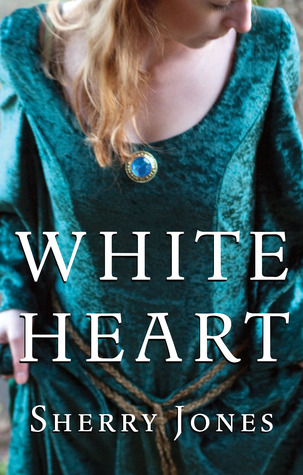
White Heart by Sherry Jones

Rating: ★ ★ ★ ★ ☆
Obtained from: Personal Kindle Library
Read: July 28, 2012

A woman's power lies in her beauty. For years, Blanche de Castille, the White Queen of France, has lived by this maxim—passed on by her grandmother, ElÉonore d'Aquitaine, as she took the girl to marry King Louis VIII. When her husband dies unexpectedly, however, Blanche finds that beauty is not enough to hold, and command, a kingdom against usurpers eager to wrest the Crown from her woman's grasp. Faced with an English invasion, barons' uprisings, and slanderous rumors, Blanche must look within herself for the strength she needs to guard the throne for her young son. Her bold response shocks the kingdom and shapes her into the formidable, seemingly heartless mother-in-law to Marguerite of Provence, wife of King Louis IX (Saint Louis) and the eldest of the "Four Sisters, All Queens" in Sherry Jones's forthcoming novel.

═══════════════════════════ ❧  ═══════════════════════════

I finished Sherry Jones' White Heart yesterday and my head is still spinning. See, I hadn't planned on revisiting the Capets so soon after reading Sophie Perinot’s Sister Queens. Not being overly familiar with the family, I had hoped to do a little research of my own before attempting another fictionalized account of their history. Oh well, best laid plans right?

I had never even heard of Blanche prior to reading Sister Queens and I was quick to grow annoyed with the bitter, manipulative, controlling dowager Perinot created. It wasn’t until reading Jones’ novella that I bothered giving 'the dragon' much thought. Who was this woman? Where did she come from? What sort of hand had life dealt her? It is a testament to both Jones’ imagination and pen that I could so quickly alter my opinion of the French Queen, even more so as her novella is only fifty eight pages long.

Jones doesn't elicit the reader's sympathy by portraying a vulnerable or demure widow. Rather, she sparks their curiosity, painting a dynamic, pragmatic and feisty woman who puts aside her personal needs and desires out of devotion for both her country and her son. It is a beautiful and intriguing characterization placed against an equally alluring backdrop. 


Would that this were a longer piece. I was so impressed by it I can't help wanting more. Highly recommended to any lover of historic fiction. 

═══════════════════════════ ❧  ═══════════════════════════
You may win the battle by killing your opponents, but you secure your kingdom - in this life, and the next - by winning their devotion. 
 ═══════════════════════════ ❧  ═══════════════════════════

Thursday, July 26, 2012

Mistress of Mourning: A Novel by Karen Harper

Rating: ★ ★ ★ ★ ☆
Obtained from: Local Library
Read: July 24, 2012

London, 1501. In a time of political unrest, Varina Westcott, a young widow and candle maker for court and church, agrees to perform a clandestine service for Queen Elizabeth of York, wife of Henry VII. The queen’s eldest child and heir to the throne, newly married Prince Arthur, has died suddenly under mysterious circumstances. Elizabeth wants Varina and royal aid Nicholas Sutton to travel into the Welsh wilderness to investigate the death. But as the couple unearths one unsettling clue after another, they begin to fear that the conspiracy they’re confronting is far more ambitious and treacherous than even the queen imagined.

════════════════════════════ ❧  ════════════════════════════

Can I be honest? I think it helped that I didn’t have any expectations going into this one. I was excited about the premise of Karen Harper’s Mistress of Mourning but because I didn’t have any preconceived ideas about the book, I wasn’t upset that it fell on the lighter side of historic fiction. The story isn’t bad, I just think if I’d been craving a hard hitting historic piece as is more my norm, this one would have left me wanting.

The characters fit the time period which is more than I can say for a lot of published works. Varina is a great example in that she is possessed of an independent streak yet she isn’t so modern minded as to seem inappropriate in Tudor England. Henry VII, Elizabeth of York, Arthur and Catherine read a little flat for my tastes but as they are largely supporting characters it is something I’m willing to overlook. Really the only character I didn’t like was young Henry VIII. I think Harper allowed history to dictate her storytelling a little. Just once I’d love to see an author downplay the younger Tudor prince and really guide the reader towards Arthur. Here, as with most if not all the Tudor fiction I’ve read, the Prince of Wales gets less face time with the reader and though his death is key to the plot, his character is largely overshadowed by the Duke of York.

I really liked what Harper did with Arthur’s death in terms of resolving the circumstances of his demise but I wasn't as thrilled with the story of Elizabeth’s brothers. Harper started out strong, interweaving the two story lines but the finale left me feeling ‘eh.’ Maybe it was too much to tie together. Maybe it was because we never got into our villain’s head or really understood his motivations. Maybe I’m bias in that I am unconsciously comparing Mistress in Mourning to Robin Maxwell’s To the Tower Born. Maybe I just feel the latter solution seemed anticlimactic against the drama of Arthur’s situation. Whatever the reason I think the combined plots were a little too much for Harper to take on.

Finally, I don’t think Harper played the setting to its best advantage. I’ve read books featuring Ludlow before and I’ve seen an author bring this particular setting to life. Guess I’m just a little sad that Harper seemed to let it fall by the way side. Researching is easy; anyone can look up the historic notes on a particular place and time. To my mind, the key in fictionalizing the past is not simply recreating people or events, the same care needs to be taken in re-imagining the world they inhabit. There isn't anything wrong or particularly upsetting in what Harper achieved here, I've just think there is room to improve. 

As always I would like to note that I’m harder on historic fiction writers than I am authors of any other genre. They are my favorite storytellers and so I hold them to a slightly higher standard. My commentary here comes off as nitpicky and critical but I really did enjoy Harper’s work and look forward to reading more of it in the future.

════════════════════════════ ❧  ════════════════════════════
Plotting was afoot, and not just mine. I had suspected before that someone close to me was not to be trusted but who?
════════════════════════════ ❧  ════════════════════════════

Sunday, June 24, 2012

The Sister Queens by Sophie Perinot

Rating: ★ ★ ★ ★ ☆
Obtained from: Local Library
Read: June 23, 2012

Patient, perfect, and used to being first, Marguerite becomes Queen of France. But Louis IX is a religious zealot who denies himself the love and companionship his wife craves. Can she borrow enough of her sister's boldness to grasp her chance for happiness in a forbidden love? Passionate, strong-willed, and stubborn, Eleanor becomes Queen of England. Henry III is a good man, but not a good king. Can Eleanor stop competing with her sister and value what she has, or will she let it slip away?

═══════════════════════════ ❧  ═══════════════════════════

Marguerite and Eleanor of Provence
Did I like the book? Obviously, but I am not above admitting that much of my admiration stems from exposure to history of which I was not already familiar. A natural scholar, I spent much of my reading cross referencing people and events. Call it a weakness, but I give points to any author that can spark my curiosity in such a way. That being said I’m torn with how to approach rating and reviewing this piece. I love Perinot’s subject matter but I’m not sure I am sold on her writing.

The story itself makes for compelling literature, but that is the case with a lot of historic fiction. At some point a reader needs to weigh what the author brings to the table against what is provided them by the historic record. For much of the novel, Perinot gives life to two very different women but I feel she lost momentum in the latter third of the book. Somewhere along the way their voices grow faint, their characters less prominent, at times even fragmented against the political backdrop of their stories. Unfortunately this also killed off much of the pacing. Where I had been unable to put the book aside I soon found myself struggling to get through even a handful of pages.  

If I have a concrete complaint about the book it is in regards to Marguerite’s oldest child, Blanche. Perinot goes to a great deal of trouble to illustrate the importance of family in both Eleanor and Marguerite’s lives. For several chapters they agonize over their inability to provide their respective kingdoms with an heir. Once they do have children, we are privy to the joy each finds in her role as mother.  For this reason I find it odd that it is a paragraph in chapter nineteen that first references the early death of the French princess. The child passed away at age two or three in the year 1243, but Perinot’s narrative doesn’t mention the event until 1246 in a chapter told from Eleanor’s point of view while she struggles with her fear of losing Edward. Marguerite’s apparent lack of affection for her first born irks me. Louis and Jean Tristan are the favored of her brood but as a mother I find it utterly incomprehensible that one could lose a child and be indifferent. Needless to say I found the reference in chapter nineteen woefully inadequate, but my feelings on the matter changed dramatically in the latter portion of the novel when Marguerite claims she would lay down her life for her children. The declaration grated my nerves.  Why should the reader believe she is capable of such devotion when we have been denied even the merest hint of maternal affection or grief for the young princess? For me, the omission proved the undoing of Marguerite’s character and greatly affected my assessment of Perinot’s work.

All things considered I am comfortable awarding four stars to Perinot’s Sister Queens, but it is a generous rating. The freshness of her subject matter went a long way in capturing both my interest and imagination and while I believe Perinot is without doubt an author to watch, I also feel there is significant room for growth. 

═══════════════════════════ ❧  ═══════════════════════════
How typical of men to think that by their brotherly embrace they are the authors of history and fortune. Marguerite and I know better. ‘Tis sisters who shape the world plain and simple.
═══════════════════════════ ❧  ═══════════════════════════ 

Monday, April 30, 2012

The Forest Laird: A Tale of William Wallace by Jack Whyte

Rating: ★ ★ ★ ☆ ☆
Obtained from: Local Library
Read: April 30,2012

In the pre-dawn hours of August 24th, 1305, in London’s Smithfield Prison, the outlaw William Wallace—hero of all the Scots and deadly enemy of King Edward of England—sits awaiting the dawn, when he is to be hanged and then drawn and quartered. This brutal sundering of his body is the revenge of the English. Wallace is visited by a Scottish priest who has come to hear his last confession, a priest who knows Wallace like a brother. Wallace's confession—the tale that follows—is all the more remarkable because it comes from real life. We follow Wallace through his many lives—as outlaw and fugitive, hero and patriot, rebel and kingmaker. His exploits and escapades, desperate struggles and victorious campaigns are all here, as are the high ideals and fierce patriotism that drove him to abandon the people he loved to save his country. William Wallace is the first heroic figure from the Scottish Wars of Independence, a man whose fame has reached far beyond his homeland. Wallace served as a subject for the Academy Award–winning film Braveheart. In The Forest Laird, Jack Whyte’s masterful storytelling breathes life into Wallace's tale, giving readers an amazing character study of the man who helped shape Scotland’s future.

═══════════════════════════ ❧  ═══════════════════════════

Those whose knowledge of William Wallace begins and ends with Mel Gibson will be sadly disappointed with Jack Whyte's The Forest Laird. This is not the over dramatized Hollywood hero we all remember from the 1995 blockbuster. Whyte's Wallace has no bells or whistles. His story is that of a man who happened to stand up at a most opportune moment in Scottish history. Nothing more.

I think it is safe to say Whyte's depiction is closer to the truth than Randall Wallace's screenplay, but that's not difficult considering the film implies William, who died in 1305, fathered Edward III, who was born 1312. Did I forget to mention fans of the film would be disappointed? Sorry, I didn't mean to disillusion the masses. My point here is that it is important to remember we actually know very little about the historic William Wallace. Short of his military career and the weeks leading up to his death, the details of his life are really anyone's guess. The Forest Laird is significantly more grounded that the traditional Wallace legends, but it is still very much a work of fiction and shouldn't be taken as anything more.  

Despite having owned a number of Whyte's books for several years, this is actually the first I've taken time to sit down and read. I should be ashamed really, but I don't know that I'll be rushing to my bookshelves anytime soon. I like the story Whyte created but the text was often bogged down by explanations of political events of which I was already very familiar. I wouldn't go so far as to say these passages were boring, wordy is probably more accurate, but they definitely didn't hold my attention. Surprisingly, these overblown political diatribes aren’t what stick out in my mind when reflecting on the novel. Though mildly annoying, they are necessary to the telling. It would be impossible to tell William’s story without explaining the Scottish Wars for Independence and the events that led up to them. No, my three star rating came down the execution, pure and simple. 

Whyte’s narrative is told solely from the perspective of William’s cousin Jamie Wallace. It works beautifully during the prologue and the early chapters of the book, but when the boys transition from awkward teens to young adults, they part company. William taking to the woods with his bow while Jamie dedicates his life to God and quiet study. Obviously this poses a problem as Jamie isn’t witness to many of William’s exploits. I think Whyte would have been better off alternating the narrative between Jamie, Mirren, and Ewan. I’m no author, but I found it difficult to remain interested in a character who was so often removed from the action and the protagonist of the story. 

The execution left something to be desired, but despite its flaws I found I really appreciated Whyte’s attempt at separating the man from the legend. I’m not screaming its praises from the rooftop, but it will be interesting to see what Whyte does with the rest of the Bravehearts Chronicles.

═══════════════════════════ ❧  ═══════════════════════════
It pains me to hear people say nowadays the William Wallace died defiant, a heroic patriot, with a shout of "Freedom!" on his lips, because it is a lie. William Wallace died slowly and brutally in silence, to my sure knowledge, for I was there in London's Smithfield Square that morning of August 24th in 1305, and all I heard of defiance was the final, demented scream of a broken, tortured man driven beyond endurance long before he died.
═══════════════════════════ ❧  ═══════════════════════════ 

Saturday, February 11, 2012

Ride for Rights by Tara Chevrestt

Rating: ★ ★ ★ ★ ☆
Obtained from: Author
Read: Jan. 23, 2012 

In the summer of 1916 women do not have the right to vote, let alone be motorcycle dispatch riders. Two sisters, Angeline and Adelaide Hanson are determined to prove to the world that not only are women capable of riding motorbikes, but they can ride motorbikes across the United States. Alone. From a dance hall in Chicago to a jail cell in Dodge City, love and trouble both follow Angeline and Adelaide on the dirt roads across the United States. The sisters shout their triumph from Pike’s Peak only to end up lost in the Salt Lake desert. Will they make it to their goal of Los Angeles or will too many mishaps prevent them from reaching their destination and thus, hinder their desire to prove that women can do it?

═══════════════════════════ ❧  ═══════════════════════════

I’m not going to pretend I don’t enjoy the occasional paranormal story adventure but I can’t help getting depressed browsing young adult lit. All the vampires, werewolves and whatnot are starting to run together. With Ride for Rights, Chevrestt pulls a complete one eighty. The author’s first foray into the world of historic fiction is a refreshing narrative of adventure and perseverance in a time too many of have seemingly forgotten. 

Less than a century ago career women were few and far between. Many had only limited involvement in activities unrelated to homemaking and child-rearing. Societal rules were highly restrictive where women were concerned yet even in this climate there were those who took a stand against inequality. Angeline and Adelaide Hanson are fictional characters but their courage of conviction and unwavering dedication exhibited in their journey across North America are as real as the women on which they were based. 

In addition to introducing readers to a lesser known chapter of the women’s rights movement, Chevrestt uses her story as a platform for the stories of other advocates and pioneers in the struggle against gender based discrimination. Inez Milholland, Amelia Earhart and Lillian Heath are only a few of the notable ladies who make cameo appearances throughout the book.  

I have great appreciation for the content and overall message of Ride for Rights but as with most of my reviews, I am not without criticism. I believe the author opted to name her characters Adelaide and Angeline out of respect for their real life counterparts. While I admire the author’s intent, I found it somewhat challenging to keep Adelaide and Angeline straight during the early chapters of the book. Despite frequently substituting the wrong sister in my imagination I found that as the novel progressed and the characters developed my confusion dissipated, eventually becoming a nonissue. 

The only other comment I have is that Angeline enjoys more face time with the reader than her sister. Angeline’s vivacious nature, her relationship with Joe Miller and access to her diary allow considerable insight into her character. Adelaide is the more reserved of the two, making her harder to relate to even when she appears at the forefront. I would have appreciated having a slightly deeper understanding of her character especially as her ultimate transformation is more dramatic than that of Angeline. 

Clearly, at four stars, these observations are of little consequence. Consider my more critical comments food for thought, a few drops the bucket if you will. It is my opinion Chevrestt has single-handedly crafted an entertaining story with an enduring message that can be enjoyed by young and old alike. 

═══════════════════════════ ❧  ═══════════════════════════
Angeline smiled and broke into a laugh. “Who are you, and what have you done with my sensible, calm sister?”
Adelaide wrapped the horrid garments around the chamber pot and as she raised her arm even with the window, looked at Angeline. “She got left somewhere on the road in Wyoming!”
═══════════════════════════ ❧  ═══════════════════════════ 

Saturday, November 5, 2011

Destiny's Child by Iris Gower

Rating: ★  ☆ ☆ 
Obtained from: Local Library 
Read: Nov. 5, 2011 

It was a prophecy told to her by an old woman: she would marry a man with flame-coloured hair, and bring forth a King of England. But Margaret Beaufort had been forced by feeble-minded Henry VI to marry the Duke of Somerset's son, so how could she ever be married to handsome, red-haired Edmund Tudor, even though she loved him? And even if that came to pass, how could any son of theirs ever become King, when there were so many others with better claims to the throne? But slowly the prophecy began to be fulfilled: at the age of thirteen Margaret was married to her beloved Edmund, and she bore him a son — but not before Edmund had died of a fever. And so Margaret poured all her love and devotion into the life of her son Henry, vowing that, whatever the cost, one day he should be King of England.

═══════════════════════════ ❧  ═══════════════════════════

*** NOTE: This review contains spoilers. Please take heed and proceed at your own risk. 

Margaret Beaufort
I am absolutely never reading Iris Gower again. Destiny’s Child is a terrible, horrible, no good, very bad book and that is being generous. I give the author pity points for attempting to fictionalize the life of Margaret Beaufort but beyond that, the book is a waste of both time and paper.

The novel begins just before or after Margaret’s ninth birthday and concludes when Margaret is forty-one. Issue number one is that between point a and b there are exactly zero references to the date. You read that correctly, zero, as in none, nil, niente. Unless you are familiar with the timeline of Margaret's life you have absolutely no idea how much time has passed between events.

Issue number two is that time slows to a crawl or rushes forward without regard for the actual timeline of events. As I said the book starts at age nine(ish) and ends at age forty-one. At the halfway point, Margaret is a new mother at the age of thirteen. I’ll save you the trouble of calculating the figures and make it simple. The first half of the book covers four years while the second covers a span of twenty-eight. Atrocious formatting.

Issue number three. Margaret was twelve years old when she married the twenty-five year old Edmund Tudor Now, I can accept the age gap and in all honesty Margaret could have easily been married to a much older man so thirteen years is not that big a deal. The problem I have is that Gower made this marriage the love match of the century! I’m sorry but I don’t see it. This was pure politics my friends. Given time it may have evolved into an affectionate arrangement but I highly doubt it was the passionate affair Gower fabricates here.

Moving on to issue number four. Margaret is twelve when Gower writes “You are lovely and innocent as a child.” and “…lifting her skirts like a child, she ran across the green to meet him.” I hate to point this out but Margaret is in fact an adolescent. Now child marriages were common place in medieval England but even so, Margaret was younger than most. The issue here is that Gower has no understanding of an adolescent’s mind. Gower’s characterization of Margaret is as savvy and intelligent as Eleanor of Aquitaine at her height. Where was the development? Where was the growth?

I don’t think I need to go much further than issue number five. In Gower’s story Edmund becomes sick during an extended visit to his father. Margaret wakes in the night to his rasping breath and realizes her beloved husband’s time is limited. Sweet story but complete bull. Edmund was captured in mid-1446 and imprisoned in South Wales. The sixth month pregnant Margaret was not in attendance when he died of plague. Upon hearing the news, Margaret fled to the protection of her brother-in-law at Pembroke Castle. Being unable to create an appropriate character, fabricating a romantic attachment, and omitting chronological references are enough to make me angry but rewriting history is an offense I cannot forgive.

I’m going to end before I write a novel. Recommended to no one, avoid at all costs.

═══════════════════════════ ❧  ═══════════════════════════
Her breath caught in her throat as she watched it being placed on hair that was like a flame under the richness of the crown. Her son, this tall young man, was now the King of England.
═══════════════════════════ ❧  ═══════════════════════════ 

Wednesday, October 26, 2011

The Hangman in the Mirror by Kate Cayley

Rating: ★ ★ ☆ ☆ ☆
Obtained from: Netgalley 
Read: Oct. 25, 2011 

A strong-willed 16-year-old girl fights for survival in 18th-century North America. Françoise Laurent has never had an easy life. The only surviving child of a destitute washerwoman and wayward soldier, she must rely only on herself to get by. When her parents die suddenly from the smallpox ravishing New France, Françoise sees it as a chance to escape the life she thought she was trapped in. Seizing her new found opportunity, Françoise takes a job as an aide to the wife of a wealthy fur trader. The poverty-ridden world she knew transforms into a strange new world full of privilege and fine things -- and of never having to beg for food. But Françoise's relationships with the other servants in Madame Pommereau's house are tenuous, and Madame Pommereau isn't an easy woman to work for. When Françoise is caught stealing a pair of her mistress's beautiful gloves, she faces a future even worse than she could have imagined: thrown in jail, she is sentenced to death by hanging. Once again, Françoise is left to her own devices to survive... Is she cunning enough to convince the prisoner in the cell beside her to become the hangman and marry her, which, by law, is the only thing that could save her life? Based on an actual story and filled with illuminating historical detail, The Hangman in the Mirror transports readers to the harsh landscape of a new land that is filled with even harsher class divisions and injustices.

═══════════════════════════ ❧  ═══════════════════════════

I lucked out with this one. True to form I saw a vaguely interesting cover and filed it away in the recesses of my mental archive as 'to-read' without reading the description. For once, my inattention worked in the author's favor for if I had read the blurb there would have been no reason to read the book. Ninety-five percent of the content is spelled out for the reader in that simple passage. Rather disappointing really.

In addition to giving away most of the plot, the blurb is one of the two places that state the book is based on true events. During the reading, I noted the unique story line but upon reading the blurb I realized how little of the plot actually came from the author's imagination. Again I found myself disappointed as the aspects I appreciated most came straight out of an obscure history book.

Françoise Laurent, the central character of The Hangman in the Mirror, lacks the charm and charisma of Moll Flanders and Becky Sharp but she is without doubt molded in their image. Morally ambiguous, she is a difficult personality to warm to and while I admired the direction Cayley took in crafting her identity, I was less than enthusiastic about the execution. Françoise is selfish and irritating but she is presented in such a way that I found myself flat out disinterested in her fate.

All things considered it would be all too easy to dismiss the book entirely but I prefer to give credit where it is due. I was displeased by Cayley's leading lady but I found Françoise's parents intriguing. Her father, a drinker and gambler of little skill, reveals himself as more complex than he appears. A hard man, it comes as a surprise that he, in his way actually cares for his sole surviving child. Françoise's mother, a laundress, is a classic example of what happens to those who lose all hope. Depressed by the harsh reality of her existence, she spends much of her time recounting the glories of France while attempting to drown herself in bottles of cheap booze. The depravity of their situation was well-illustrated and the multifaceted nature of these two characters gives me hope for Cayley's future publications.

Not my cup tea but then, not every book is. Recommended to fan's of Celia Rees' Sovay.

═══════════════════════════ ❧  ═══════════════════════════
They will hang me in the winter and I will hang dead in the snow. My face swollen, my spine broken, I will swing in the wind, in the wide open spaces of New France, and I will stand as a warning for all those who are born with nothing and wish for more.
 ═══════════════════════════ ❧  ═══════════════════════════

Wednesday, October 12, 2011

#BookReview: The Winter Palace: A Novel of Catherine the Great by Eva Stachniak

═══════════════════════════ ❧  ═══════════════════════════
From award-winning author Eva Stachniak comes this passionate novel that illuminates, as only fiction can, the early life of one of history’s boldest women. The Winter Palace tells the epic story of Catherine the Great’s improbable rise to power—as seen through the ever-watchful eyes of an all-but-invisible servant close to the throne.

Her name is Barbara—in Russian, Varvara. Nimble-witted and attentive, she’s allowed into the employ of the Empress Elizabeth, amid the glitter and cruelty of the world’s most eminent court. Under the tutelage of Count Bestuzhev, Chancellor and spymaster, Varvara will be educated in skills from lock picking to lovemaking, learning above all else to listen—and to wait for opportunity. That opportunity arrives in a slender young princess from Zerbst named Sophie, a playful teenager destined to become the indomitable Catherine the Great. Sophie’s destiny at court is to marry the Empress’s nephew, but she has other, loftier, more dangerous ambitions, and she proves to be more guileful than she first appears.

What Sophie needs is an insider at court, a loyal pair of eyes and ears who knows the traps, the conspiracies, and the treacheries that surround her. Varvara will become Sophie’s confidante—and together the two young women will rise to the pinnacle of absolute power.

With dazzling details and intense drama, Eva Stachniak depicts Varvara’s secret alliance with Catherine as the princess grows into a legend—through an enforced marriage, illicit seductions, and, at last, the shocking coup to assume the throne of all of Russia.
Impeccably researched and magnificently written, The Winter Palace is an irresistible peek through the keyhole of one of history’s grandest tales.
═══════════════════════════ ❧  ═══════════════════════════
Rating: ★ ★ ★ ☆ ☆   |   Obtained from: Netgalley   |   Read: October 12, 2011 
═══════════════════════════ ❧  ═══════════════════════════

*** NOTE: This review contains spoilers. Please take heed and proceed at your own risk. 

Catherine the Great
Straight out of the gate I have to give Stachniak a lot of points. In a market flooded with Tudor lit, The Winter Palace stands apart. A lover of history and historic fiction, I was overjoyed to see an author branching out. Of course, I wont be happy until someone writes a solid fiction on Crown Prince Rudolf and Baroness Marie Vetsera but Catherine the Great is definitely a step in the right direction.

Overall, I enjoyed the book. There were times I was frustrated with the narrator, Varvara's long absence from court especially, but in general, I liked the female spy. Her ability to adapt to survive was intriguing but the nature of her work was down right fun to read. To Stachniak's credit, Varvara provides tidbits on several members of the court in addition to the young princess. I can't speak to the validity of these accounts but they were entertaining nonetheless.

For all that I appreciated Varvara, I can't say I enjoyed Catherine. She just didn't jump off the page for me. Catherine was a remarkable woman who would redefine her empire over the course of her thirty four year reign. Stachniak's characterization was too delicate to read as strong or astute as her historic counterpart. Likewise, Peter came off as childish and mildly unstable. Classically, Peter was a neurotic, mean and loathsome individual who was consumed by his obsession with the military and a steadfast hatred of his people. In comparison, Stachniak's interpretation was almost boring.

My commentary doesn't end with the issues of characterization. Lets examine the cover art. There is no shortage of artwork of Catherine the Great so I have to ask why the publisher chose to feature a partial portrait of one of her contemporaries for the cover image. While you can't see the head, the slim white hand caressing the golden robe actually belongs to the Empress Maria Theresa, mother of Marie Antoinette. 

Empress Maria Theresa
My second question regards the tagline 'A novel of Catherine the Great.' The book is not about the Empress so much as it is Varvara and her observations of life at court during the reigns of Elizabeth, Peter and Catherine. I feel something like 'A novel of Romanov Russia'  or 'A novel of the Romanov Court' would have been more appropriate when the content is considered. Additionally, I think the family name would generate equal if not more interest. I understand the concept of a head liner but thanks to the conspiracy theories surrounding the of death of Grand Duchess Anastasia Nikolaevna Romanov, the surname is far more recognizable than Catherine's name alone. 

On the subject of content I have to concede a certain resemblance to Philippa Gregory's The Queen's Fool. Hannah spies for Lord Robert and Queen Mary, Varvara for Chancellor Bestuzhuv and Empress Elizabeth. Both befriend the individual they are meant to be spying on, Elizabeth and Catherine respectively. Varvara is Roman Catholic in an Eastern Orthodox court and Hannah is Jewish in a... well it depends on the year but you see what I am getting at. Don't misunderstand, I appreciated both novels. I am just commenting that there are more than a few similarities between the two titles. Consider yourself warned.

My personal concerns aside, The Winter Palace is a clever introduction to the Romanov Court. Recommended to fans of Phillip Gregory and Juliet Grey

═══════════════════════════ ❧  ═══════════════════════════
Here in the Russian court, I could have warned the pretty newcomer from Zerbst, life is a game and every player is cheating. Everyone watches everyone else. There is no room in this palace where you can be truly alone. Behind these walls there are corridors, a whole maze of them. For those who know, secret passages allow access where none is suspected. Panels open, bookcases move, sounds travel through hidden pipes. Every word you say may be repeated ad used against you. Every friend you trust may betray you.
 ═══════════════════════════ ❧  ═══════════════════════════

Friday, September 30, 2011

#BookReview: Beware, Princess Elizabeth by Carolyn Meyer

═══════════════════════════ ❧  ═══════════════════════════
Imprisonment. Betrayal. Lost love. Murder. What more must a princess endure?

Elizabeth Tudor's teenage and young adult years during the turbulent reigns of Edward and then Mary Tudor are hardly those of a fairy-tale princess. Her mother has been beheaded by Elizabeth's own father, Henry VIII; her jealous half sister, Mary, has her locked away in the Tower of London; and her only love interest betrays her in his own quest for the throne.

Told in the voice of the young Elizabeth and ending when she is crowned queen, this second novel in the exciting series explores the relationship between two sisters who became mortal enemies. Carolyn Meyer has written an intriguing historical tale that reveals the deep-seated rivalry between a determined girl who became one of England's most powerful monarchs and the sister who tried everything to stop her. 
═══════════════════════════ ❧  ═══════════════════════════
Rating: ★ ★ ☆ ☆ ☆   |   Obtained from: Local Library   |   Read: September 30, 2011
═══════════════════════════ ❧  ═══════════════════════════

Elizabeth I
The younger daughter of Henry VIII, Elizabeth’s future was far from certain. She enjoyed the benefits of a royal heir for only a short period, being declared illegitimate about the same time her mother lost her head. She was only returned to the line of succession during Henry’s sixth and final marriage. Her childhood was marked by a series of stepmothers; one dying in child-bed, one set aside, one beheaded and one who was lucky enough to be widowed before Henry tired of her.  Though a child, I believe she took to heart her father’s inconsistencies, noting the lack of security which supposedly accompanied a marriage.

The chances that Elizabeth would ascend the throne were minimal, being behind both her younger brother Edward and older sister Mary in Henry’s Third Succession Act. Both of Henry’s daughters were again struck from the succession by their brother Edward, who left the throne to his cousin the Lady Jane Grey upon his death. Jane’s tenure lasted a mere nine days. Whereafter she was imprisoned in the Tower and eventually executed for high treason.

Hailed at her coronation, Mary soon fell into her subject’s disfavor. Her persecution of Protestants earned her the moniker Bloody Mary. A Protestant herself, Elizabeth’s position was a precarious one. Like her older sister before her, she defied her monarch and held to her convictions and much like her sister, lived in fear that her religion would be her death warrant.

Discontent soon burned as brightly as Mary’s Protestant subjects, lending support to those who wished to see Elizabeth on the throne. The Wyatt Rebellion gave Mary reason to place her sister in the Tower of London. I imagine the sentence was frightening as prisoners rarely escaped the Tower alive but doubly so for Elizabeth whose own mother was executed on the grounds some eighteen years earlier.

Elizabeth as depicted in Beware, Princess Elizabeth is an ambitious young woman. I feel it is a true enough assessment of her character as Queen but premature for the period of Meyer’s story. Elizabeth’s position was never as secure as Meyer implies. Elizabeth also seemed overly confident in her conviction that she would one day rule England. I am sure Elizabeth was aware of the possibility and even took steps to have it realized, but considering the uncertainty that marked her adolescent years I don’t believe she was at any time assured she would take her father's throne. Raised in the knowledge that Queen Anne was beheaded, witness to the trial and execution of Queen Catherine, spectator to the political games that cost Queen Jane so dearly, I remained convinced that Elizabeth was very much aware that the crown offered as much security to a woman as did the state of matrimony.

Historically accurate in detail but I found this installment disappointing in its black and white interpretations. It may be appealing to younger readers but 
even then, I would suggest looking elsewhere for introductory material on the Virgin Queen. 

═══════════════════════════ ❧  ═══════════════════════════
The moment had arrived. My sister was dead, no longer my enemy. I had survived this first great challenge. Yet as long as I had prepared for this moment, expected it, feared it and desired it, I was overwhelmed with emotion. I fell to my knees...
 ═══════════════════════════ ❧  ═══════════════════════════

Wednesday, September 28, 2011

#BookReview: Becoming Marie Antoinette by Juliet Grey

═══════════════════════════ ❧  ═══════════════════════════

Raised alongside her numerous brothers and sisters by the formidable empress of Austria, ten-year-old Maria Antonia knew that her idyllic existence would one day be sacrificed to her mother’s political ambitions. What she never anticipated was that the day in question would come so soon. Before she can journey from sunlit picnics with her sisters in Vienna to the glitter, glamour, and gossip of Versailles, Antonia must change everything about herself in order to be accepted as dauphine of France and the wife of the awkward teenage boy who will one day be Louis XVI. Yet nothing can prepare her for the ingenuity and influence it will take to become queen. Filled with smart history, treacherous rivalries, lavish clothes, and sparkling jewels, Becoming Marie Antoinette will utterly captivate fiction and history lovers alike.

═══════════════════════════ ❧  ═══════════════════════════
Rating: ★ ★ ★ ☆ ☆   |   Obtained from: Personal Library   |   Read: September 23, 2011 
═══════════════════════════ ❧  ═══════════════════════════

Marie Antoinette is a hard personality for me to like. In most of the literature I’ve come across, she is depicted as something of a twit. Becoming Marie Antoinette is no exception; in point of fact, this particular incarnation describes herself as “no more talented than a parrot or a trained monkey.” As a reader I find it incredibly frustrating to follow a character as dense and frivolous as Grey's Maria Antonia. Still,  I remain hopeful that an author will one day take up the challenge and gift this unfortunate Hapsburg a degree of substance.

The author may not have presented a new version of the Archduchess but she does offer a fresh look at a period which is often overlooked, her childhood. Everything from the need for braces to the troublesome issue presented by the size of the Maria’s forehead is integrated into the narrative. While it makes for somewhat tedious reading, Grey's efforts are admirable.

Maria Antonia bored me but the I found the depiction of her mother, the Empress Maria Theresa quite fascinating. The Hapsburg matriarch gave birth to sixteen children over a period of twenty years. Do the math. Almost as soon as she was done having babies she was beset with the task of marrying them off. Thank heaven she was a royal and didn't have to worry about the details of actually raising her brood. Grey's Empress isn't particularly maternal but can you really blame the woman? Having so many pregnancies must have been exhausting and it certainly explains her exasperation over Maria's inability to conceive an heir in the early years of her marriage. 

Becoming Marie Antoinette is good starting point for freshman scholars but I think more savvy readers will be disappointed. The story itself has much in common with Titanic; even the novice historian knows the ending. The trick is in bringing something new to the table, a  twist that captures the imagination. Whether Grey’s telling will do so has yet to be seen.

═══════════════════════════ ❧  ═══════════════════════════
Think of the family motto: Others wage wars to succeed, but you, fortunate Hapsburg, marry! Sometimes I think Maman had so many daughters because she has so many enemies!
 ═══════════════════════════ ❧  ═══════════════════════════

Tuesday, September 27, 2011

#BookReview: Mary, Bloody Mary by Carolyn Meyer

═══════════════════════════ ❧  ═══════════════════════════

The story of Mary Tudor's childhood is a classic fairy tale: A princess who is to inherit the throne of England is separated from her mother; abused by an evil stepmother who has enchanted her father; stripped of her title; and forced to care for her baby stepsister, who inherits Mary's rights to the throne. Believe it or not, it's all true. Told in the voice of the young Mary, this novel explores the history and intrigue of the dramatic rule of Henry VIII, his outrageous affair with and marriage to the bewitching Anne Boleyn, and the consequences of that relationship for his firstborn daughter. Carolyn Meyer has written a compassionate historical novel about love and loss, jealousy and fear - and a girl's struggle with forces far beyond her control.


═══════════════════════════ ❧  ═══════════════════════════
Rating: ★ ★ ★ ☆ ☆   |   Obtained from: Local Library   |   Read: September 26, 2011
═══════════════════════════ ❧  ═══════════════════════════

Mary I
I wage a personal war against the stereotypes that plague stepfamilies. I grew up in one, was, for a time, a stepmother in my own right. Wicked is not a universal descriptor in the realm of stepparents, but as mine has refused to speak to me for more than three years now, I understand it is sometimes an all too accurate descriptor. One such example is the case of Mary Tudor and her stepmonster, Anne Boleyn.

Mary was born the beloved daughter of Henry VIII and his first wife, Queen Catherine. Their only surviving child, she wanted for nothing. She lived a blissful existence, the cherished heir to the throne, until the arrival of Anne Boleyn. Mary's father was not known for his fidelity but Anne was unlike any of Henry's previous mistresses. Ambitious and cunning, Anne's seduction of England's king set in motion a chain of events that would alter the course of the entire nation. Henry's daughter 

As Anne's star rose, Mary's fell. She lost her mother, her father, her title, her inheritance and eventually, even her legitimacy was thrown to the wind. She was forced into the service of her infant sister, Anne’s daughter Elizabeth, and came under fire for her Catholic faith. Had Mary been a few years older she may have been spared this fate, protected by an alliance to foreign kingdom. A few years younger and she may have been restored to favor before she was considered a spinster. Fate, unfortunately, is a fickle mistress.

My only criticism of Meyer's work is that it focuses less on Mary than it does the impact Anne  had on her life. While an important aspect, I was disappointed to never get a sense of who Mary actually was


Mary, Bloody Mary is a solid if somewhat concise introduction to the early life of Henry's oldest daughter, picking up shortly before Anne's arrival and concluding just after her execution. While not the whole story, I admire Meyer's decision to omit the more graphic events of Mary's tenure as Queen from the narrative in consideration of the target audience. That being said I am firmly against the censure of history and greatly appreciated the appearance of these details in the historic notes. 

Recommended to adolescent readers of Tudor fiction.


═══════════════════════════ ❧  ═══════════════════════════
I came very near to confessing to Susan that at times I, too, hated my father. It would have been so much easier if I hated him in the same way I had come to hate Anne Boleyn - pure, simple hatred. But I did not. I could not. I had not given up hope, even yet, that someday he would once again regard me as his perfect princess, his precious pearl.
 ═══════════════════════════ ❧  ═══════════════════════════