Showing posts with label Genre: Translation. Show all posts

Monday, January 2, 2017

A Hope at the End of the World by Sarah Lark

Rating: ★ ★ ★ ☆ ☆
Obtained from: Netgalley
Read: December 2, 2016

In the chaos of World War II, Polish teenagers Helena and Luzyna Grabowski have lost everything. Without parents or a home, they are shipped to a refugee camp in Persia, where the days ahead hold only darkness. When they hear that orphans are being selected for relocation to New Zealand, Helena is filled with hope—until the officials say they have a place only for her younger sister. On the morning she is to be transported, Luzyna fails to join the chosen group, and Helena takes her place. But the horrors of war—and her guilt at abandoning her sister—follow Helena on the journey across the sea, as a man from her past preys on her fear and remorse. Though the people in New Zealand embrace her, the traumas Helena has suffered threaten her peace and blind her to the devotion of James, a charming, heroic young Allied pilot. If Helena can let go and dare to hope again, she may finally step out of the long shadow of her past to find a future made whole—a new community, a new family, a new love.

═══════════════════════════ ❧  ═══════════════════════════

The jacket description on Sarah Lark’s A Hope at the End of the World left me positively giddy. I mean, how often do you see historic fiction set in New Zealand? This isn't a base question people, I'm one hundred percent serious. You see, the unfortunate reality is that the big publishing houses have this annoying habit of vetoing everything that isn't a guaranteed sell. If it isn't trending, they ain't biting, and according to the pain-in-the-ass people who dictate the majority of the American market, New Zealand doesn't make the cut. Am I bitter? Just a bit. I want fresh fiction, but mainstream publishers think 'new' means 'risky' and throw those kinds of stories in the grey cylindrical receptacles under their desks to prevent them from ever seeing the light of day. For people like me, this is basically a 'fuck you' and I for one am tired of it.

Enter AmazonCrossing. You read that right folks, I am shamelessly giving a shout out to a publisher, but hear me out. Unlike most of the big houses, this platform is doing great things for new authors and unsung stories by bridging the gap between the old and new markets. Think I'm crazy? Take a closer look at A Hope at the End of the World. Author Sarah Lark was born in Germany and lives in Spain. Her work was translated by D. W. Lovett. Think about that. When was the last time you read a translated fiction huh? I'm willing to bet most of you can tally your total on one hand. I'll grant that WWII fiction is trending at the moment so it's entirely possible that subject matter helped grease some wheels here, but this story intrigued me for a number of reasons and while I know readers hate long winded reviews, I refuse to apologize for hick-jacking my own commentary to say thank you to Lark for writing something unique and thank you to AmazonCrossing for making it possible for a book like Lark's to find its audience.

Getting off my soapbox, I am gonna come right and say that I am not a fan of this cover. The jacket gives me too many fuzzy wuzzies, but in all fairness that vibe is entirely in keeping with the tone of Lark's narrative. A Hope at the End of the World may be set against WWII, but it is first and foremost a romance. Lark touches on some fascinating historical footnotes, but the sweetly chaste relationship between Luzyna and James takes center stage. I personally had a hard time accepting this fact, but I'm a WWII junkie who enjoys witty banter, sarcastic dialogue and intense dogfights. Should I have known what I was getting myself into? Yes. Did it stop me? No. Don't appreciate my comments? Take a number.

Because I know someone will ask, I should probably note that I loved Lark's use of POW camps and the refugee transport to New Zealand. I also thought she made great use of Maori culture and tradition. Though limited in scope, I enjoyed the unique landscape of the novel and was surprised by the appearance of small yet fascinating details such as the wartime experiences of the Neumanns. That said, I found the characterizations one dimensional, the plot twists predictable, and I was decidedly frustrated by how neatly everything was resolved. At the end of the day I don't see myself recommending A Hope at the End of the World as a war fiction, but I would put it out there to those readers who appreciate light historicals and sweet romance.

═══════════════════════════ ❧  ═══════════════════════════
She noticed a troop transport had arrived in Wellington that day, carrying not refugees but wounded soldiers. They, too, had escaped the war—and probably with brighter hopes for the future than hers.
═══════════════════════════ ❧  ═══════════════════════════

Thursday, July 31, 2014

Potions and Paper Cranes by Lan Fang

Rating: ★ ★ ★ ★ ★
Obtained from: Historical Novel Review
Read: May 26, 2014

A stark, honest portrayal of cursed love during the Japanese occupation of Java and the struggle for Indonesian independence. Sulis is a young woman selling potions in Surabaya's harbor district. She meets Sujono, a coolie with dreams of becoming a freedom fighter, and whose passion for Matsumi, a geisha called to Java by a Japanese general, is destined to ruin all of them. In Potions and Paper Cranes, each tells the story of their lives during the end of World War II and Indonesia's transition from a Dutch colony to an independent republic.

════════════════════════════ ❧  ════════════════════════════

My nose for World War II lit led me to Lan Fang's Potions and Paper Cranes, but my appreciation for the novel has nothing to with global events of the period. Shocking as it sounds, it was Fang's depiction of individual experiences that captured my imagination. 

The main story shifts points of view between Sulis, Sujono and Matsumi, something I liked as the role of each character alters with each narrative voice. It is an approach few could manage, but I felt Fang handled it beautifully. Another thing I liked was contrast in Fang's approach to Chinese, Indonesian and Japanese culture and how those influences might have interacted during the uncertainty brought on by the larger conflict.   

deeply intuitive tale, Potions and Paper Cranes is a naked assessment of human nature, a haunting narrative that touches something in the reader's soul and shakes them to the core. 

════════════════════════════ ❧  ════════════════════════════
Life taught me that I did not need to give answers because He would make arrangements. Life was a skillful player - I had befriended Him when I was child and knew He did not need any answer from me. Life would determine my fate.
════════════════════════════ ❧  ════════════════════════════

Saturday, May 11, 2013

The Confidant by Hélène Grémillon

Rating: ★ ★ ☆ ☆ ☆
Obtained from: Local Library
Read: May 10, 2013

Paris, 1975. While sifting through condolence letters after her mother's death, Camille finds a long, handwritten missive that she assumes came by mistake. But every Tuesday brings another installment from a stranger named Louis, a man separated from his first love, Annie, in the years before World War II. In his tale, Annie falls victim to the merciless plot of a wealthy, barren couple just as German troops arrive in Paris. But also awaiting Camille's discovery is the other side of the story - one that calls into question Annie's innocence and reveals the devastating consequences of revenge. As Camille reads on, she realizes that her own life may be the next chapter in this tragic story.

════════════════════════════ ❧  ════════════════════════════

Ugh. I had such high hopes for Helene Grémillon's The Confidant, but this book didn't work for me at all. From the first pages I struggled with this one, pushing myself to finish it for the sole purpose of being able to say it didn't kick my ass.

To be fair part the problem has to do with my reasons for picking up the book in the first place. I routinely browse the New Release shelves at my local library and got really excited when I discovered what appeared in part to be a WWII era story set in occupied France. I love the time period and couldn't resist bringing the book home with me. 

Unfortunately the aspects I'd looked forward to the most were largely trivialized. The story is so character driven that the conflict fades to the background. Where I'd hoped for hard hitting historic fiction I got a melodrama set in Paris during the 1930s and 40s. 

Once I realized my error, I tried to to judge the book on what it is rather than what I hoped it would be, but here too I had tremendous difficulty. Despite the provocative situational drama, the characters are extraordinarily thin. I couldn't relate to them which made it practically impossible to rouse much interest in their respective fates. 

The nail in the coffin, however, was the style in which The Confidant is written. I don't know if it suffers the same issues in the original French, but the English translation lacks any sort of transition between character point of view or time period. Honestly I spent half my reading struggling to determine who was talking and to what period of the story their narrative referred. 

I wanted an novel I could get lost in, not one that made me fight for every inch, but that is exactly what I had to do with this book. Not one I enjoyed and one I would be exceedingly hard pressed to recommend. 


════════════════════════════ ❧  ════════════════════════════
And what if my next breath proved to be my last? Terrified, I held my breath and turned to the statue of Saint Roch, imploring him; he had cured the lepers, so surely he could save me. 
════════════════════════════ ❧ ════════════════════════════

Saturday, September 8, 2012

Crime at Mayerling: The Life and Death of Mary Vetsera by Georg Markus

Rating: ★ ★ ★ ★ ☆
Obtained from: Personal Library
Read: September 2, 2012

Crime at Mayerling deals with two of the most sensational crimes committed during the past century. Although separated in time by a hundred years, the two events are inextricably connected. In January 1889 the corpses of Archduke Rudolf, Crown Prince of Austria-Hungary, and the Baroness Mary Vetsera were discovered in the prince's hunting lodge at Mayerling, near Vienna. The circumstances were hushed up and for decades scientists and historians had been trying to solve the mystery of what had happened at Mayerling. An Austrian "Mayerling buff" felt compelled to reach an explanation in his own way: in December 1992 he stole the coffin with the Baroness's remains and had them examined by forensic specialists. Markus describes the remarkable findings which finally resolve the mystery of Mayerling.


═══════════════════════════ ❧  ═══════════════════════════

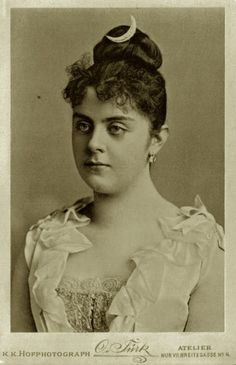
Mary Vetsera
Crime at Mayerling is one of the first nonfiction titles I would recommend to anyone interested in the tragedy. It isn't the most detailed text on the subject, but it is a pretty decent introduction. The text is straightforward, easy to follow, and not overly detailed politically.  

Another major selling point is that author Georg Markus was literally on the front lines of the latest twist in the Mayerling story. In 1991, Helmut Flatzelsteiner, in his obsession with the case, removed the remains of Mary Vetsera from her grave in Heiligenkreuz. Markus became involved in 1993 when Flatzelsteiner tried to sell the story to various media outlets. His book is an account these events as well as the 1889 murder/suicide. 

It was published in 1993, ahead of the examination reports on Mary’s remains. Depending on your particular interest, this could be a positive or a negative. I personally didn’t care much either way, but other readers may feel slighted by the omission.

Crime at Mayerling is the most recently published nonfiction available in the United States which is sad as it is nearly two decades old. That said, it is the most concise version of the story and though I don’t think it the best volume for those already familiar with the case, it is by far the best English language primer available regarding the mystery.

═══════════════════════════ ❧  ═══════════════════════════ 
January 30, 1889, caused indescribable horror throughout the world. Crown Prince Rudolph who, as future King of Austria-Hungary, was destined to guide the fate of a gigantic empire, died in a mysterious way in his hunting lodge at Mayerling near Vienna. In the first reports there was no mention of violence nor anything about a second corpse.
 ═══════════════════════════ ❧  ═══════════════════════════

Monday, May 7, 2012

Purge by Sofi Oksanen

Rating: ★ ★ ★ ☆ ☆
Obtained from: Personal Kindle Library
Read: May 4, 2012

An international sensation, Sofi Oksanen's award-winning novel Purge is a breathtakingly suspenseful tale of two women dogged by their own shameful pasts and the dark, unspoken history that binds them. When Aliide Truu, an older woman living alone in the Estonian countryside, finds a disheveled girl huddled in her front yard, she suppresses her misgivings and offers her shelter. Zara is a young sex-trafficking victim on the run from her captors, but a photo she carries with her soon makes it clear that her arrival at Aliide's home is no coincidence. Survivors both, Aliide and Zara engage in a complex arithmetic of suspicion and revelation to distill each other's motives; gradually, their stories emerge, the culmination of a tragic family drama of rivalry, lust, and loss that played out during the worst years of Estonia's Soviet occupation. Sofi Oksanen establishes herself as one the most important voices of her generation with this intricately woven tale, whose stakes are almost unbearably high from the first page to the last. Purge is a fiercely compelling and damning novel about the corrosive effects of shame, and of life in a time and place where to survive is to be implicated.

═══════════════════════════ ❧  ═══════════════════════════
Even now, a few days after finishing Oksanen’s Purge, I am not sure how exactly how I feel about the story. Well, that’s not entirely true. I know how I feel. It’s sort of an “eh, umm, huh” kind of feeling. Problem is that doesn’t give me much to work with when comes to constructing a review. 

The murky undertones of the piece are provocative to say the least, but I think the graphic nature of the content is a bit of a turn off for those unwilling to examine or even acknowledge the dark underbelly of society. From Zara’s treatment as a trafficked sex slave to Aliide’s experiences both during and after Soviet occupation, the story is designed to make you think about survival, shame, enmity and dishonor in terms most of us have never considered. Personally, I like that Oksanen isn’t afraid to go where she does. I’m not necessarily drawn to the explicitness of her work, but I can appreciate the technique as necessary in exploring the themes of the piece. 

Despite my admiration for the emotional content of the book, I felt it lacking in other areas. For example, I feel the exploration of human nature took precedence over character development. Oksanen presents Zara and Aliide in a very straight forward manner and try as I might, I couldn’t find it in me to accept the impersonal depictions of individuals experiencing such extreme circumstances. I think that establishing a connection between the characters and the reader would have really enhanced the power of what Oksanen was attempting to express through her narrative.

Additionally, I felt the writing style was difficult to navigate. Creatively artistic, but functionally problematic. Oksanen jumps between characters and time frames at will with little or no exposition. She throws bits of information at the reader, leaving them to piece together an often times incomplete picture of events. It is enough to understand what is happening but it is far from ideal. 

Finally, I have to acknowledge the disadvantage I felt while reading Purge. I can’t speak for all Americans but our exposure to European history is rather limited. Prior to reading Oksanen’s work, I had only vague notions of the political events described in the book. I don’t blame the author for my lack of familiarity with the subject, but I think it is worth noting that book poses certain challenges for those less acquainted Estonian history.  

═══════════════════════════ ❧  ═══════════════════════════
She couldn’t brush it away like she ought to have done. Instead it seeped in between the wallpaper paste, into the gaps left behind by the photographs that she had hidden there and later destroyed. The fear settled in as though it felt at home. As though is would never go away. As though it had just been out somewhere for a while and had come home for the evening.
 ═══════════════════════════ ❧  ═══════════════════════════