Showing posts with label Genre: Historical Nonfiction. Show all posts

Thursday, August 11, 2016

Lost in the Pacific: Epic Firsthand Accounts of WWII Survival Against Impossible Odds edited by L. Douglas Keeney

Rating: ★ ★ ★ ★ ☆
Obtained from: Netgalley
Read: August 2, 2016

With dreams of flying, they enlisted from all across America, eager to defeat the Japanese and bring an end to the war. Most were no more than 21 or 22 years old, fresh from pilot training, with quick reflexes, sharp eyes, and keen intelligence. And when they crashed, they needed every physical and mental advantage to survive. Their ordeals began with blunt-force impact with the sea. From overhead, a hail of bullets from enemy planes. From below, the imminent danger of shark attack. Then the ongoing perils of drowning, exposure, heat, storms, and capture. Two out of three airmen who survived their crashes were forever lost. The lucky ones lived to tell these amazing stories. The creator of the "Lost Histories of World War II" series and cofounder of The Military Channel, editor L. Douglas Keeney reviewed hundreds of reels of microfilm from the archives of Maxwell Air Force Base’s History Center, searching out the most captivating first-person accounts among the crash-and-rescue reports from WWII’s Pacific Theater. Each of these 23 previously unpublished narratives, recounted in the airman’s own words, tells a true-life tale that’s stranger than any fiction. Each forms a testament to human resilience, character, and fortitude. All offer inspiring new insights into the heroics of the vanishing generation whose valor will live forever.

═══════════════════════════ ❧  ═══════════════════════════

L. Douglas Keeney’s Lost in the Pacific: Epic Firsthand Accounts of WWII Survival Against Impossible Odds isn’t my favorite WWII book of all time, but it’s definitely high on the list. Unearthed from aging archives and copied off microfilm, Keeney compiled a truly inspiring collection of survival, determination, and ingenuity.

Each story is edited from a firsthand account as written by the man who lived it. The details vary and are sometimes graphic, but each chapter gives affords a very unique insight to some truly extraordinary situations as well as the actions and decisions that ultimately saved these men from death in the Pacific.

Lost in the Pacific offers a comprehensive snapshot of aviation operations and safety protocols during WWII. I was fascinated by the development of the survival kits, but I was equally impressed with how often those kits were used in ways they hadn’t been designed for. You can’t make this stuff up and I appreciate Keeney both for finding these stories and compiling them as he did.

Keeney does not glorify these men, he’s actually very careful to remind his readers that they were the exceptions rather than the rule and that most, once medically cleared, desired only to take to the skies and resume their duties. Lost in the Pacific stands as testament to humble men and the fortitude it took to survive extreme circumstances. A definite must read for all WWII enthusiasts.

═══════════════════════════ ❧  ═══════════════════════════
“For every airman who was rescued, two were lost. For every man who was found alive on a floating raft, two died, blistered and dehydrated in the sun. Sharks swarmed. Enemies strafed. Cold water chilled. Bombers fell apart in the sea—half the crew reaching a raft, the other half sinking in the wreckage. In most cases, airplanes became flying coffins. And in many others, young men drifted in the ocean, hopelessly waiting for help that never came.”
═══════════════════════════ ❧  ═══════════════════════════

Wednesday, August 10, 2016

The Extinguished Flame: Olympians Killed in the Great War by Nigel McCrery

Rating: ★ ★ ★ ☆ ☆
Obtained from: Netgalley
Read: August 5, 2016

In August 2016 the world will be spellbound by the Olympic Games in Rio de Janeiro as 10,500 athletes from 206 countries compete in 306 events. Tracing their origins back to the Greeks in 776 BC, the history of the Olympics is a glorious one but it has had its darker moments.During the First World War no fewer than 135 Olympians perished. Many had won Gold, Silver and Bronze medals. They came not just from the UK, Germany, France, USA but from all over the globe.Wyndham Halswelle, killed in action on 31 March 1915, won a Gold, Silver and Bronze medals in both field and track events. The Frenchman Leon Flameng, the fastest cyclist ever, died on 2 January 1917, having won Gold, Silver and Bronze medals in the 1896 Olympics. The German Fritz Bartholomae, killed in action 12 September 1915, won a Bronze in the rowing eights during the 1912 Olympics. The list of these heroes goes on and on. Each Olympian, who made the supreme sacrifice, is honored in this magnificent book by a summary of their life, sporting achievement and manner of their death.

═══════════════════════════ ❧  ═══════════════════════════

George Eric Fairbairn
I jumped when I stumbled over Nigel McCrery’s The Extinguished Flame: Olympians Killed in the Great War. It sounds disrespectful considering the subject matter, but I enjoy stories of those who served on the front lines and I especially like those volumes that treat them as individuals rather than military units.

McCrery uncovered a lot of forgotten stories in this volume. I can’t imagine the level of research that went into it, but I think the author’s dedication quite obvious. The book is section by year – 1914, 1915, 1916, 1917, and 1918 – with each Olympian chronicled in order by their date of death. The bios include general details about each athlete with specific information about their service and the Games and events in which they competed. Where possible the author also included photos of each Olympian.

Personally, I quite liked the volume and think it offers an interesting snapshot of lives cut short by the Great War. That said, I found the presentation a little dry and unbalanced. Some of the bios are a few pages long while others are only a few paragraphs. One can’t blame the author for this, there simply a lot of information out there on some of these individuals, but as a reader I was frustrated that some stories are very well-documented while other lives boiled down to only a few lines.

I found the writing itself a little bland and didn’t appreciate how the flow felt punctuated as if the author were hitting bullet points with each statement, but I think the book rather insightful just the same and I would definitely recommend it as resource to anyone interested in the men who gave their lives to the Great War.

═══════════════════════════ ❧  ═══════════════════════════
People are not numbers on some casualty list, so many lost on this day, so many on that, they are people who had jobs and lives, and who loved and were loved.
═══════════════════════════ ❧  ═══════════════════════════

Friday, August 5, 2016

Mary Ann Cotton - Dark Angel Britain's First Female Serial Killer by Martin Connolly

Rating: ★ ★ ★ ☆ ☆
Obtained from: Netgalley
Read: August 3, 2016

A female thief, with four husbands, a lover and, reportedly, over twelve children, is arrested and tried for the murder of her step-son in 1872, turning the small village of West Auckland in County Durham upside down. Other bodies are exhumed and when they are found to contain arsenic, she is suspected of their murder as well. The perpetrator, Mary Ann Cotton, was tried and found guilty and later hanged on 24 March 1873 in Durham Goal. It is claimed she murdered over twenty people and was the first female serial killer in England. With location photographs and a blow by blow account of the trial, this book challenges the claim that Mary Ann Cotton was the ‘The West Auckland Borgia’, a title given to her at the time. It sets out her life, trial, death and the aftermath and also questions the legal system used to convict her by looking at contemporary evidence from the time and offering another explanation for the deaths. The book also covers the lives of those left behind, including the daughter born to Mary Ann Cotton in Durham Goal.

═══════════════════════════ ❧  ═══════════════════════════

*** NOTE: It should be understood that the title of this piece is somewhat misleading as Mary Ann Cotton was not Britain's First Female Serial Killer. For more information on her predecessors, please click here. 

Mary Ann Cotton - Dark Angel Britain's First Female Serial Killer by Martin Connolly looked interesting from the start. I’m fascinated with true crime stories and female serial killers aren’t exactly common, so I requested an ARC and was pretty excited when a copy of the book landed in my inbox. Unfortunately, for me though, that enthusiasm was short lived.

In the introduction, Martin notes that he chose to write this biography/case study in response to queries he received after publishing The Potted History of West Auckland. He explains that Mary Ann’s story generated a lot of interest and he felt compelled to put together a more complete picture of her life. That’s great and quite generous in a way, but I think this admission has a lot to do with the difficulties I experienced while reading Connolly’s finished work.

I’d never heard of Mary Ann Cotton, but the author was catering to an audience who had and that disconnect impacted my experience. I didn’t understand the basics of the case and long story short, I found Connolly’s narration intensely difficult to navigate. The author jumps about the timeline on the assumption that his audience knows all the players, understands the crime, and has a general awareness of how events will unfold.

I ended up supplementing my reading with a fair amount of virtual research just to finish the book and found myself thinking the finished book more trouble than it’d been worth. The material is interesting, but I felt much of its power lost in the telling and would have difficulty recommending this one to all but ardent enthusiasts.

═══════════════════════════ ❧  ═══════════════════════════
"I am convinced that my children were poisoned. I suspected it at the time, but I did not want my mind to dwell on the subject. They were healthy and strong, and only ill a few days before they died. Any time she gave them anything they vomited, and were sick and purged."
═══════════════════════════ ❧  ═══════════════════════════

Saturday, July 30, 2016

Lost Destiny: Joe Kennedy Jr. and the Doomed WWII Mission to Save London by Alan Axelrod

Rating: ★ ★ ☆ ☆ ☆
Obtained from: Local Library
Read: July 30, 2016

On August 12, 1944, Lieutenant Joseph P. Kennedy, Jr., heir to one of America's most glamorous fortunes, son of the disgraced former ambassador to Great Britain, and big brother to freshly minted PT-109 hero JFK, hoisted himself up into a highly modified B-24 Liberator bomber. The munitions he was carrying that day were fifty percent more powerful than TNT. Kennedy's mission was part of Operation Aphrodite/Project Anvil, a desperate American effort to rescue London from a rain of German V-1 and V-2 missiles. The decision to use these bold but crude precursors to modern-day drones against German V-weapon launch sites came from Air Corps high command. Lieutenant General Jimmy Doolittle, daring leader of the spectacular 1942 Tokyo Raid, and others concocted a plan to install radio control equipment in "war-weary" bombers, pack them with a dozen tons of high explosives, and fly them by remote control directly into the concrete German launch sites—targets too hard to be destroyed by conventional bombs. The catch was that live pilots were needed to get these flying bombs off the ground and headed toward their targets. Joe Jr. was the first naval aviator to fly such a mission. And—in the biggest manmade explosion before Hiroshima—it killed him. Alan Axelrod's Lost Destiny is a rare exploration of the origin of today's controversial military drones as well as a searing and unforgettable story of heroism, WWII, and the Kennedy dynasty that might have been.

═══════════════════════════ ❧  ═══════════════════════════

I'm not gonna beat around the bush here and I'm not going to apologize for my bluntness either. I was hugely disappointed with Alan Axelrod's Lost Destiny: Joe Kennedy Jr. and the Doomed WWII Mission to Save London and feel the eleven and half hours I spent listening to the audio largely wasted.

Axelrod did a marvelous job chronicling Operations Anvil and Aphrodite, but his coverage of the famous face that graces the jacket is nothing short of laughable. The mission, it's purpose and development are illustrated in minute detail, but the man himself features in less than 30% of the text. Looking back, I wish the author had written solely about the operations and listed Kennedy as little more than a tragic pilot, but it's also occurred to me that Joe Jr. was tacked on to this manuscript to capitalize on name recognition and artificially inflate sale numbers.

I'll grant the book has merit for those interested in exhaustive detail regarding WWII aviation, developing technologies, weaponry, and bomb testing, but those looking for information on Kennedy's war experience best look elsewhere.

═══════════════════════════ ❧  ═══════════════════════════
But there was no way to know all this as the V-1s rained down and as London, among other cities, waited in dread for assault by the even deadlier V-2s. So the Allied bombers flew, and so Joseph P. Kennedy Jr. and the other men of Aphrodite and Anvil prepared to lay down theirs lives to save the citizens of London and the other English towns.
═══════════════════════════ ❧  ═══════════════════════════

Saturday, September 8, 2012

Crime at Mayerling: The Life and Death of Mary Vetsera by Georg Markus

Rating: ★ ★ ★ ★ ☆
Obtained from: Personal Library
Read: September 2, 2012

Crime at Mayerling deals with two of the most sensational crimes committed during the past century. Although separated in time by a hundred years, the two events are inextricably connected. In January 1889 the corpses of Archduke Rudolf, Crown Prince of Austria-Hungary, and the Baroness Mary Vetsera were discovered in the prince's hunting lodge at Mayerling, near Vienna. The circumstances were hushed up and for decades scientists and historians had been trying to solve the mystery of what had happened at Mayerling. An Austrian "Mayerling buff" felt compelled to reach an explanation in his own way: in December 1992 he stole the coffin with the Baroness's remains and had them examined by forensic specialists. Markus describes the remarkable findings which finally resolve the mystery of Mayerling.


═══════════════════════════ ❧  ═══════════════════════════

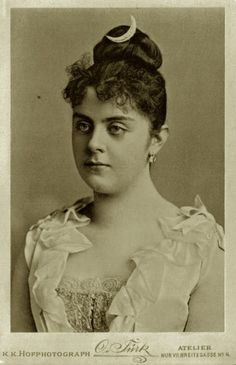
Mary Vetsera
Crime at Mayerling is one of the first nonfiction titles I would recommend to anyone interested in the tragedy. It isn't the most detailed text on the subject, but it is a pretty decent introduction. The text is straightforward, easy to follow, and not overly detailed politically.  

Another major selling point is that author Georg Markus was literally on the front lines of the latest twist in the Mayerling story. In 1991, Helmut Flatzelsteiner, in his obsession with the case, removed the remains of Mary Vetsera from her grave in Heiligenkreuz. Markus became involved in 1993 when Flatzelsteiner tried to sell the story to various media outlets. His book is an account these events as well as the 1889 murder/suicide. 

It was published in 1993, ahead of the examination reports on Mary’s remains. Depending on your particular interest, this could be a positive or a negative. I personally didn’t care much either way, but other readers may feel slighted by the omission.

Crime at Mayerling is the most recently published nonfiction available in the United States which is sad as it is nearly two decades old. That said, it is the most concise version of the story and though I don’t think it the best volume for those already familiar with the case, it is by far the best English language primer available regarding the mystery.

═══════════════════════════ ❧  ═══════════════════════════ 
January 30, 1889, caused indescribable horror throughout the world. Crown Prince Rudolph who, as future King of Austria-Hungary, was destined to guide the fate of a gigantic empire, died in a mysterious way in his hunting lodge at Mayerling near Vienna. In the first reports there was no mention of violence nor anything about a second corpse.
 ═══════════════════════════ ❧  ═══════════════════════════

Friday, August 24, 2012

War Letters: Extraordinary Correspondence from American Wars by Andrew Carroll

Rating: ★ ★ ★ ★ ☆ 
Obtained from: Personal Library 
Read: June 12, 2012 

With the drama of history and the intimacy of memoir, Andrew Carroll's landmark anthology encompasses every conflict, from the Civil War to Desert Storm. Presenting 175 letters, this book captures vivid depictions of famous battles, profound reflections on the nature of warfare, gripping tales of rescues and escapes, and many more unforgettable expressions of fear, loneliness, love, and patriotism.


═══════════════════════════ ❧  ═══════════════════════════

Carroll's collection of war letters is one of the most interesting nonfiction pieces I've had the pleasure of picking up. It is one thing to read the politics or the history of a conflict, it is another to read the thoughts of the men and women who fought it. To read, in their own words, their motivations, emotions and understanding of history as it was being made. 

In most cases, the individuals who put pen to paper were not writers and Carroll did not make any effort to edit their correspondence. These letters are presented in their original format, a choice which I felt, preserved their value. Don’t expect perfect structure or grammar and be prepared to navigate some interesting variations of spelling, but read between the lines and you will understand my rating. 

I wont call this a must read. It isn't the kind of book that takes over your down time and creeps up on you throughout the day, but I greatly enjoyed it just the same. Carroll's obvious regard for history and respect for those who fought made this a particularly well-construction collection and one I’d highly recommend.

═══════════════════════════ ❧  ═══════════════════════════
Perhaps it was a different story in their hearts, or perhaps there were too tired, or thinking of home too much, or thinking of their buddies who didn't live to see the victory, to do much celebrating or merry making. But I'm sure of one thing - the troops were glad they wouldn't have to fight anymore - I was.
 ═══════════════════════════ ❧  ═══════════════════════════