Sunday, July 29, 2012

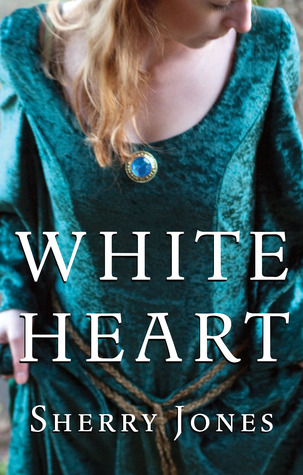
White Heart by Sherry Jones

Rating: ★ ★ ★ ★ ☆
Obtained from: Personal Kindle Library
Read: July 28, 2012

A woman's power lies in her beauty. For years, Blanche de Castille, the White Queen of France, has lived by this maxim—passed on by her grandmother, ElÉonore d'Aquitaine, as she took the girl to marry King Louis VIII. When her husband dies unexpectedly, however, Blanche finds that beauty is not enough to hold, and command, a kingdom against usurpers eager to wrest the Crown from her woman's grasp. Faced with an English invasion, barons' uprisings, and slanderous rumors, Blanche must look within herself for the strength she needs to guard the throne for her young son. Her bold response shocks the kingdom and shapes her into the formidable, seemingly heartless mother-in-law to Marguerite of Provence, wife of King Louis IX (Saint Louis) and the eldest of the "Four Sisters, All Queens" in Sherry Jones's forthcoming novel.

═══════════════════════════ ❧  ═══════════════════════════

I finished Sherry Jones' White Heart yesterday and my head is still spinning. See, I hadn't planned on revisiting the Capets so soon after reading Sophie Perinot’s Sister Queens. Not being overly familiar with the family, I had hoped to do a little research of my own before attempting another fictionalized account of their history. Oh well, best laid plans right?

I had never even heard of Blanche prior to reading Sister Queens and I was quick to grow annoyed with the bitter, manipulative, controlling dowager Perinot created. It wasn’t until reading Jones’ novella that I bothered giving 'the dragon' much thought. Who was this woman? Where did she come from? What sort of hand had life dealt her? It is a testament to both Jones’ imagination and pen that I could so quickly alter my opinion of the French Queen, even more so as her novella is only fifty eight pages long.

Jones doesn't elicit the reader's sympathy by portraying a vulnerable or demure widow. Rather, she sparks their curiosity, painting a dynamic, pragmatic and feisty woman who puts aside her personal needs and desires out of devotion for both her country and her son. It is a beautiful and intriguing characterization placed against an equally alluring backdrop. 


Would that this were a longer piece. I was so impressed by it I can't help wanting more. Highly recommended to any lover of historic fiction. 

═══════════════════════════ ❧  ═══════════════════════════
You may win the battle by killing your opponents, but you secure your kingdom - in this life, and the next - by winning their devotion. 
 ═══════════════════════════ ❧  ═══════════════════════════

Saturday, July 28, 2012

Drinking with Dead Women Writers by Elaine Ambrose, & A.K. Turner

Rating: ★ ★ ★ ★ ☆
Obtained from: Personal Kindle Library
Read: July 27, 2012

Essays on drinking with Louisa May Alcott, Jane Austen, Erma Bombeck, The Bronte Sisters, Willa Cather, Emily Dickinson, George Eliot, Margaret Mead, Edna St. Vincent Millay, Margaret Mitchell, Carson McCullers, Flannery O'Connor, Sylvia Plath, Ayn Rand and Virginia Woolf. Most early female writers used pen names because women weren't regarded as competent writers. Margaret Mitchell wrote only one published novel in her lifetime, but Gone with the Wind won the Pulitzer Prize for Fiction in 1937 and sold more than 30 million copies. Emily Dickinson was so paranoid that she only spoke to people from behind a door. Carson McCullers wrote The Heart Is a Lonely Hunter at age 22. Her husband wanted them to commit suicide in the French countryside, but she refused. Ambrose and Turner explore these and other intriguing facts about the most famous (but departed) women in literary history.

════════════════════════════ ❧  ════════════════════════════

Some of you may know that I am addicted to kindle freebies. I’m ashamed to say my digital library is flooded with titles I’ve downloaded at no charge. Thing is, I’ve found that most of these books are decent at best. I try to review them, give my honest feedback and all but I’ve made it a sort of personal mission to find something worth recommending. Usually, I come up short and occasionally I have to concede defeat but I have found reason to hope. Ambrose and Turner’s Drinking with Dead Women Writers is amusing, creative and, in my opinion, worth the 2.99 it is now going for on Amazon.

In a nutshell, the book is a compiled set of mock interviews between the Ambrose, Turner and some of the most well-known literary women of the underworld. Chapters are short, a few pages each but distinctive. I had worried Ambrose and Turner would run out of steam but this wasn’t the case. I was as tickled by Margaret Mead as I was Ayn Rand. Dorothy Parker and Erma Bombeck literally had me giggling through my lunch break. Giggling I tell you! Really my only quibble is the final line of Ambrose’s sit down with Margaret Mitchell. Rather than channel her own work into her dialogue as do our other interviewees, the deceased opted to advertise her appreciation for artistic license and screen legend Clark Gable. It’s funny really; I never would have thought the author would prefer the film adaptation to her own work. Go figure.

Engaging and revealing, but most of all, flat out funny. Will definitely be on the lookout for the next installment, Drinking with Dead Drunks, this fall.

════════════════════════════ ❧  ════════════════════════════
Come and see me sometime at Winchester Cathedral. I’ll be hovering over the nave, making fun of pompous people.
════════════════════════════ ❧  ════════════════════════════

Thursday, July 26, 2012

Mistress of Mourning: A Novel by Karen Harper

Rating: ★ ★ ★ ★ ☆
Obtained from: Local Library
Read: July 24, 2012

London, 1501. In a time of political unrest, Varina Westcott, a young widow and candle maker for court and church, agrees to perform a clandestine service for Queen Elizabeth of York, wife of Henry VII. The queen’s eldest child and heir to the throne, newly married Prince Arthur, has died suddenly under mysterious circumstances. Elizabeth wants Varina and royal aid Nicholas Sutton to travel into the Welsh wilderness to investigate the death. But as the couple unearths one unsettling clue after another, they begin to fear that the conspiracy they’re confronting is far more ambitious and treacherous than even the queen imagined.

════════════════════════════ ❧  ════════════════════════════

Can I be honest? I think it helped that I didn’t have any expectations going into this one. I was excited about the premise of Karen Harper’s Mistress of Mourning but because I didn’t have any preconceived ideas about the book, I wasn’t upset that it fell on the lighter side of historic fiction. The story isn’t bad, I just think if I’d been craving a hard hitting historic piece as is more my norm, this one would have left me wanting.

The characters fit the time period which is more than I can say for a lot of published works. Varina is a great example in that she is possessed of an independent streak yet she isn’t so modern minded as to seem inappropriate in Tudor England. Henry VII, Elizabeth of York, Arthur and Catherine read a little flat for my tastes but as they are largely supporting characters it is something I’m willing to overlook. Really the only character I didn’t like was young Henry VIII. I think Harper allowed history to dictate her storytelling a little. Just once I’d love to see an author downplay the younger Tudor prince and really guide the reader towards Arthur. Here, as with most if not all the Tudor fiction I’ve read, the Prince of Wales gets less face time with the reader and though his death is key to the plot, his character is largely overshadowed by the Duke of York.

I really liked what Harper did with Arthur’s death in terms of resolving the circumstances of his demise but I wasn't as thrilled with the story of Elizabeth’s brothers. Harper started out strong, interweaving the two story lines but the finale left me feeling ‘eh.’ Maybe it was too much to tie together. Maybe it was because we never got into our villain’s head or really understood his motivations. Maybe I’m bias in that I am unconsciously comparing Mistress in Mourning to Robin Maxwell’s To the Tower Born. Maybe I just feel the latter solution seemed anticlimactic against the drama of Arthur’s situation. Whatever the reason I think the combined plots were a little too much for Harper to take on.

Finally, I don’t think Harper played the setting to its best advantage. I’ve read books featuring Ludlow before and I’ve seen an author bring this particular setting to life. Guess I’m just a little sad that Harper seemed to let it fall by the way side. Researching is easy; anyone can look up the historic notes on a particular place and time. To my mind, the key in fictionalizing the past is not simply recreating people or events, the same care needs to be taken in re-imagining the world they inhabit. There isn't anything wrong or particularly upsetting in what Harper achieved here, I've just think there is room to improve. 

As always I would like to note that I’m harder on historic fiction writers than I am authors of any other genre. They are my favorite storytellers and so I hold them to a slightly higher standard. My commentary here comes off as nitpicky and critical but I really did enjoy Harper’s work and look forward to reading more of it in the future.

════════════════════════════ ❧  ════════════════════════════
Plotting was afoot, and not just mine. I had suspected before that someone close to me was not to be trusted but who?
════════════════════════════ ❧  ════════════════════════════

Tuesday, July 3, 2012

The Lost Wife by Alyson Richman

Rating: ★ ★ ★ ★ ★
Obtained from: Local Library
Read: June 2, 2012

In pre-war Prague, the dreams of two young lovers are shattered when they are separated by the Nazi invasion. Then, decades later, thousands of miles away in New York, there's an inescapable glance of recognition between two strangers. Providence is giving Lenka and Josef one more chance. From the glamorous ease of life in Prague before the Occupation, to the horrors of Nazi Europe, The Lost Wife explores the power of first love, the resilience of the human spirit- and the strength of memory.

═══════════════════════════ ❧  ═══════════════════════════

I flagged this book as 'to read' in October 2011. I skimmed the blurb at that time and added it to my list based on the time frame alone. World War II is sort of my thing after all. It wasn't until I noticed the book at the library that I actually absorbed the basic premise of the story and to be honest, my first thought was 'uh-oh.' I knew the minute I picked it up that it would be coming home with me, I couldn't say no, but I wasn't sure I'd enjoy the book as much as I have other war related fiction. The Holocaust is an important chapter of the war but it is far from my favorite sub topic. I was nervous. 

Two days later I finished the last page and came up for air. Alyson Richman's writing is nothing short of breathtaking. I've encountered plenty of authors with a gift for storytelling but only a handful have ever struck me as truly gifted in their ability to manipulate the written word. The Lost Wife is easily one of the most beautifully composed pieces I've ever picked up. 

As to the plot, Lenka and Josef experience great sadness in the course of their lives, each struggling with their own personal demons. Despite the somber tone of the book I really enjoyed the story Richman crafted for her characters from their first meeting in Prague to their reunion decades later in the United States. Personally I would have liked to see more of Josef's life during the war, more of Lenka's after it, maybe a scene or two after their reunion - I felt a little cheated there, but for the most part I was very satisfied with the piece. I even found aspects of the concentration camp interesting as I had never before studied life at Terezin. Richman didn't change my mind on Holocaust lit but she did craft an exquisite story of strength, love, faith and hope. 

On a side note I find it amusing that several of the reviews express surprise and/or disgust that the end of the story is given away in the opening pages of the book. It is true that we first meet our leading characters in their old age, but, quite frankly, that is disclosed in the blurb. I wonder if these individuals bothered to read the back cover or if they merely opened the title without much thought to the premise. Perhaps it is just me, but I don't think it is particularly fair to denounce a title for something so clearly stated in the description. This isn't a book about where a couple ended up, it is about how they get there. 

Go out, find a copy, and experience it for yourself. The Lost Wife is not one to be passed up. 

═══════════════════════════ ❧  ═══════════════════════════
I have come to believe that love is not a noun but a verb. An action. Like water, it flows to its own current. If you were to corner it in a dam, true love is so bountiful it would flow over. Even in separation, even in death, it moves and it changes. It lives within memory, in the haunting of a touch, the transience of a smell, or the nuance of a sigh.
═══════════════════════════ ❧ ═══════════════════════════

Sunday, June 24, 2012

Scarlet by A.C. Gaughen

Rating: ★ ★ ☆ ☆ ☆
Obtained from: Local Library
Read: May 27, 2012

Many readers know the tale of Robin Hood, but they will be swept away by this new version full of action, secrets, and romance. Posing as one of Robin Hood’s thieves to avoid the wrath of the evil Thief Taker Lord Gisbourne, Scarlet has kept her identity secret from all of Nottinghamshire. Only the Hood and his band know the truth: the agile thief posing as a whip of a boy is actually a fearless young woman with a secret past. Helping the people of Nottingham outwit the corrupt Sheriff of Nottingham could cost Scarlet her life as Gisbourne closes in. It’s only her fierce loyalty to Robin—whose quick smiles and sharp temper have the rare power to unsettle her—that keeps Scarlet going and makes this fight worth dying for. 

═══════════════════════════ ❧  ═══════════════════════════

*** NOTE: This review contains spoilers. Please take heed and proceed at your own risk. 

To sum up, Gaughen’s Scarlet is decent enough for those who aren’t particularly familiar with the Robin Hood story or have a distinct preference for female leads, but I think a significant number of readers will be disappointed with the liberties taken by the author and/or put off by the predictability of the piece (especially apparent to those who have seen the BBC series).

I had a lot of problems with this book, but one that stands out is how easy it is to guess the plot twist prior to the big reveal. I had this one figured out by the end of chapter five and found I didn’t garner much satisfaction from the rest of the story. I hate admitting, it but I only finished the book so I could write the review. 

Unfortunately the more I read, the more annoyed I became. I never warmed to Scarlet, but I absolutely despised how Gaughen chose to fold the young thief into the well-known legend. Scarlet seems to be the only member of the band with any initiative, she is the only one with any real aptitude for theft and strategy, and she is the only one who can remain level headed when things get complicated. Excuse my language but what the hell do the boys need Robin for? I can’t express how upset I was by this treatment of the classic story. Scarlet, regardless of gender, is a supporting role. Robin is the hero. Period. Obviously I find the idea of different points of view interesting or I wouldn’t have bothered picking up the book, but there is a line and Gaughen crossed it by repeatedly allowing her leading lady to overshadow Robin in his own story. This isn’t a fresh take on an old tale; it is a straight up rewrite. 

Since I’m at it, I couldn’t stand the idea of a twenty one year old Robin. As a reader I’ve always pictured him as a seasoned adult. I feel regardless of the station to which he was born, a man only a few years out of his teens doesn’t have enough life experience or maturity to inspire anyone to take on the injustice of England under Prince John. One could argue that Robin began fighting for the crown at age fifteen and was thus forced to grow up faster, but personally I’m more inclined to believe a young man with such a background would be struggling with what we know today as PTSD well into his twenties. 

The issues don’t end with characterization. I am dismayed to report that here again we see that lovely staple of young adult lit, that hallmark of the unimaginative, that characteristic which so many of us loath beyond words – the love triangle. I refuse to rant; I’ve mounted this particular soapbox on more than one occasion and don’t have the inclination to do so again. All the same, I think the words mundane, trite, corny, banal, boring, and downright dull adequately illustrate my feelings on the subject. 

Now let’s talk vernacular. Gaughen goes to a great deal of trouble to give Scarlet a distinctive manner of speech throughout the story, so much so that some readers have even complained over the result. Personally, I didn’t mind, but considering the obvious amount of effort put forth in this department, I have a real problem with words that are not appropriate for a story that takes place in approximately 1196. For example, two handed broadswords did exist at this point in time, but the earliest known use of the word ‘claymore’ is from 1527. Similarly the word ‘gunpowder’ was not in use until the 1400s. I know I sound nitpicky, but really, it is not unlike going to the Renaissance Fair and seeing an individual dressed as Queen Elizabeth sporting a pair of Nike tennis shoes. Go all the way or not at all; this bridging the gap stuff doesn’t work. 

One last minor complaint: I despise the final line of the cover blurb. There are certain constants in the Robin Hood tale but there are also aspects that are unique to particular tellings. One such characteristic is the concept of one worth dying for. Early in the 1991 film adaptation, Kevin Costner’s Robin asks Morgan Freeman’s Azeem “was [Jasmina] worth it?” Azeem’s response “worth dying for” is echoed in the final scenes when their roles are reversed and Azeem asks the same question of Robin in reference to Lady Marian. The line was so intrinsic to the love story that Bryan Adams included it in the lyrics of the movie’s theme song ‘Everything I Do.’ Though Gaughen uses the phrase only twice within the text, three times if you include the blurb, I couldn’t help cringing over the fact that it appeared at all. 

I’ve issued higher ratings to books with construction issues in the past and I’ve even been known to overlook historic inaccuracies if a story is particularly engaging but I couldn’t bring myself to make exception for Scarlet. I wanted to like this book, but in the end I took little enjoyment from the piece. Two stars, not for me.

═══════════════════════════ ❧  ═══════════════════════════
No one really knows 'bout me. I'm Rob's secret, I'm his informant, I'm his shadow in dark places. No one ever takes me for more than a knockabout lad, a whip of a boy. They never really see. 
 ═══════════════════════════ ❧  ═══════════════════════════

The Sister Queens by Sophie Perinot

Rating: ★ ★ ★ ★ ☆
Obtained from: Local Library
Read: June 23, 2012

Patient, perfect, and used to being first, Marguerite becomes Queen of France. But Louis IX is a religious zealot who denies himself the love and companionship his wife craves. Can she borrow enough of her sister's boldness to grasp her chance for happiness in a forbidden love? Passionate, strong-willed, and stubborn, Eleanor becomes Queen of England. Henry III is a good man, but not a good king. Can Eleanor stop competing with her sister and value what she has, or will she let it slip away?

═══════════════════════════ ❧  ═══════════════════════════

Marguerite and Eleanor of Provence
Did I like the book? Obviously, but I am not above admitting that much of my admiration stems from exposure to history of which I was not already familiar. A natural scholar, I spent much of my reading cross referencing people and events. Call it a weakness, but I give points to any author that can spark my curiosity in such a way. That being said I’m torn with how to approach rating and reviewing this piece. I love Perinot’s subject matter but I’m not sure I am sold on her writing.

The story itself makes for compelling literature, but that is the case with a lot of historic fiction. At some point a reader needs to weigh what the author brings to the table against what is provided them by the historic record. For much of the novel, Perinot gives life to two very different women but I feel she lost momentum in the latter third of the book. Somewhere along the way their voices grow faint, their characters less prominent, at times even fragmented against the political backdrop of their stories. Unfortunately this also killed off much of the pacing. Where I had been unable to put the book aside I soon found myself struggling to get through even a handful of pages.  

If I have a concrete complaint about the book it is in regards to Marguerite’s oldest child, Blanche. Perinot goes to a great deal of trouble to illustrate the importance of family in both Eleanor and Marguerite’s lives. For several chapters they agonize over their inability to provide their respective kingdoms with an heir. Once they do have children, we are privy to the joy each finds in her role as mother.  For this reason I find it odd that it is a paragraph in chapter nineteen that first references the early death of the French princess. The child passed away at age two or three in the year 1243, but Perinot’s narrative doesn’t mention the event until 1246 in a chapter told from Eleanor’s point of view while she struggles with her fear of losing Edward. Marguerite’s apparent lack of affection for her first born irks me. Louis and Jean Tristan are the favored of her brood but as a mother I find it utterly incomprehensible that one could lose a child and be indifferent. Needless to say I found the reference in chapter nineteen woefully inadequate, but my feelings on the matter changed dramatically in the latter portion of the novel when Marguerite claims she would lay down her life for her children. The declaration grated my nerves.  Why should the reader believe she is capable of such devotion when we have been denied even the merest hint of maternal affection or grief for the young princess? For me, the omission proved the undoing of Marguerite’s character and greatly affected my assessment of Perinot’s work.

All things considered I am comfortable awarding four stars to Perinot’s Sister Queens, but it is a generous rating. The freshness of her subject matter went a long way in capturing both my interest and imagination and while I believe Perinot is without doubt an author to watch, I also feel there is significant room for growth. 

═══════════════════════════ ❧  ═══════════════════════════
How typical of men to think that by their brotherly embrace they are the authors of history and fortune. Marguerite and I know better. ‘Tis sisters who shape the world plain and simple.
═══════════════════════════ ❧  ═══════════════════════════ 

Friday, June 1, 2012

Mariah's Quest by Dianna Crawford & Sally Laity

Rating: ★ ★ ★ ☆ ☆
Obtained from: Netgalley
Read: April 16, 2012

Bound to serve. . .longing to love. Mariah Harwood, one of three indentured sisters, stands on a Baltimore auction block in 1753. The dashing young gentleman who buys her just may be her ticket to marriage, wealth, and freedom. Once in Colin Barclay’s possession, Mariah grows to realize her pursuit won’t be as easy as she planned. Colin Barclay is as charming and rash as Mariah is reckless. He willingly outbids the other men for Mariah’s indenturement papers, but as he claims the grateful beauty, her overbearing sister dampens his anticipation by making him solemnly promise to deliver Mariah untouched to his family’s plantation. Undeterred, Colin welcomes the challenge of seducing Mariah—no strings attached. But best-laid plans soon go awry when Colin is wounded in battle. As he faces a world of bitterness, Mariah finds she needs more than charm to win his heart. Can she summon the inner beauty and faith to prove her love?

═══════════════════════════ ❧  ═══════════════════════════

*** NOTE: This review contains spoilers. Please take heed and proceed at your own risk. 

Fellow readers, I have turned a corner. For the first time, I am awarding Laity and Crawford less than four stars. I'm sorry ladies, I really am, but a generous three is all I can muster for Mariah's Quest. The book didn't pack the same punch as your previous collaborations. Consider this a warning folks, there be spoilers ahead. 

Let's start with the blurb. Mariah is depicted as a scheming young woman with her eye on an advantageous marriage and freedom from her indentured status. I can agree with that, but the blurb also states "her pursuit wont be as easy as she planned." Huh? Where does that come from? Colin spends their first day together devising a means by which to keep her in his family home thereby increasing his access to the lady in question and limiting his competition for her affection. The single hurdle to their romance takes shape in the formidable mistress of the house, Cora Barclay, but we'll come back to her later. My point is the blurb offers a much overblown exaggeration of the situation. 

The blurb also describes our heroine as "reckless." Again I find I am scratching my head. Colin and Mariah are alone for maybe two pages of the entire book and Mariah spends most of that ink worrying over her reputation. She frets over walking into the woods with Colin without an escort, nearly jumps out of her skin during their only real kiss and worries how their being alone in the Barclay home will be perceived by the neighbors. By definition, reckless means marked by a lack of proper caution or careless of the consequences. Mariah Harwood doesn't fit the mold, a borderline prude maybe, but certainly not reckless. 

If Colin Barclay wasn't a fictional character I would encourage him to file a slander suit. The Barclay heir never actually tries to make Mariah his mistress. He privately flirts with the idea on a couple of occasions, but from the beginning he is half in love with the English rose. No joke, the two spend only a handful of private moments together before he proposes. Proposes friends. As in for better or worse, till death do us part, joined together in the eyes of God, holy matrimony. Doesn't sound much like a country playboy to me, but what do I know. 

I'm already tiptoeing around the romance so I'll just say it. Laity and Crawford may have seen sparks flying, but I sure didn't. Colin is obviously interested in Mariah but the first time he leaves her side he goes prowling the local assembly with his cousin. He comes back to Mariah with a ring but it didn't seem like appropriate behavior for a besotted lover. Of course, Mariah isn't much better. She flirts with the attentions of various men in Colin's absence, most notably the Barclay's horse trainer. Maybe I am off base here, but the pair seem infatuated with rather than genuinely attached to one another.  

Our lovers aren't the only two who seem to suffer from inconsistent characterization. Cora Barclay is right there with them. The Barclay matriarch comes out swinging, making it clear that any dalliance between Colin and Mariah will not be tolerated, not even if Mariah ends up with child. In 1753 that is nothing short of brass. Unfortunately, Cora soon loses her nerve, merely tolerating Mariah's presence and accepting her inability to remove the girl from the Barclay home and her son's affections. For the most part anyway. She makes a halfhearted attempt at shaming Mariah in front of the  Barclay peers and there is a lovely moment when she shouts her displeasure at Mariah's ineptitude as her son's mistress. Not to fear though, by the day of the wedding Cora is singing Mariah's praises from the hilltops. Can someone please explain to me where this character comes from? I don't get it. Unless she suffers from some sort of personality disorder. Then it all makes perfect sense.  

Under usual circumstance, I praise Laity and Crawford for the skill in which they integrate history into their plots. Not this time. It takes half the book for the the characters to get into events in the Ohio River Valley and by the time we realize Colin, Tuck and Nate actually saw action, the battles are over and the wounded have returned home. Having waited two thirds of the novel for anything of historic significance to happen, I felt entirely cheated.

In my review of Rose's Pledge, I commented on what I felt to be recycled material. Mariah's Quest isn't as blatant as its predecessor, but it isn't without issue and does share certaion similarities with a character highlighted . Little Amy, the youngest of the Barclay clan, spends an inordinate amount of time in the stables among the horses and is less than thrilled with more feminine pursuits of the day. These are traits she shares with Emily Haynes of the Freedom's Holy Light series. Taking this into consideration I believe the Barclay and Haynes families would enjoy one another. Both have large land holdings, profit from the raising of horse flesh and neither mistress of the house is particularly impressed by their son's choice of indentured bride. 

Was I impressed? Decidedly not. Do I regret reading the book? No, but I really expected a lot more from it. Will I read the third installment? Probably. I really want to believe that Mariah's Quest was a fluke accident, a rare misstep by two authors I genuinely appreciate. 

Recommended to fans of The Midwife of Blue Ridge and the Freedom's Holy Light series.

═══════════════════════════ ❧  ═══════════════════════════
Yes. In her quest for Colin, she'd be diligent. Extremely diligent. After all, as her instructress, Miss Simkins, loved to remind her, Rose, and Lily, "A man has no need to buy a cow if he can get the milk for free."
 ═══════════════════════════ ❧  ═══════════════════════════